What a Professional Tune-Up Includes
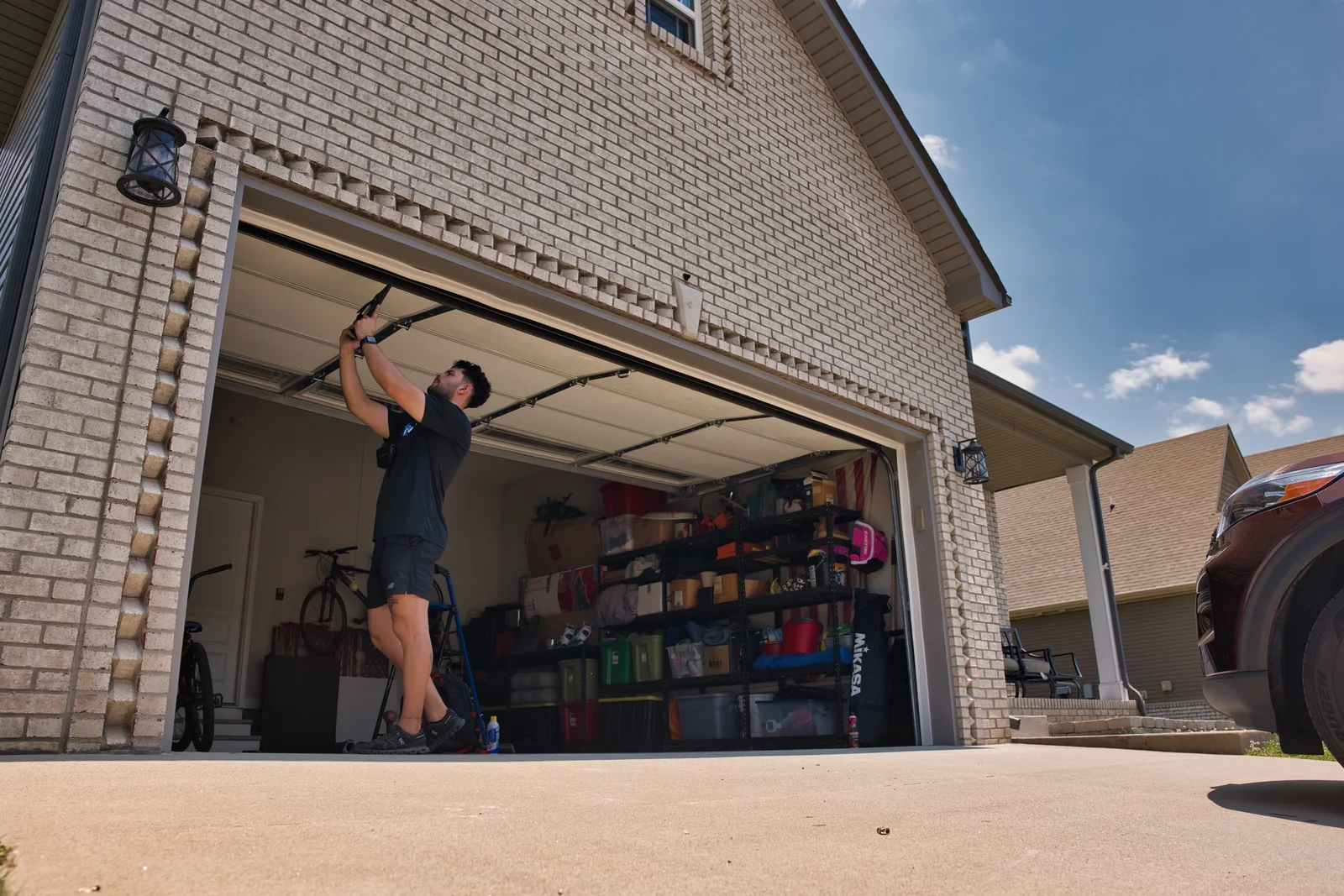
While a garage door might seem simple, it's a finely balanced system with numerous components working under significant tension. A professional maintenance service involves a comprehensive, point-by-point inspection to ensure every part functions correctly and safely. A trained technician can spot subtle signs of wear and tear that might otherwise go unnoticed until they cause a major failure. This thorough evaluation is designed to identify and address potential issues before they compromise your door's performance or safety, giving you peace of mind.
Review the maintenance membership benefits if you are considering an ongoing plan.
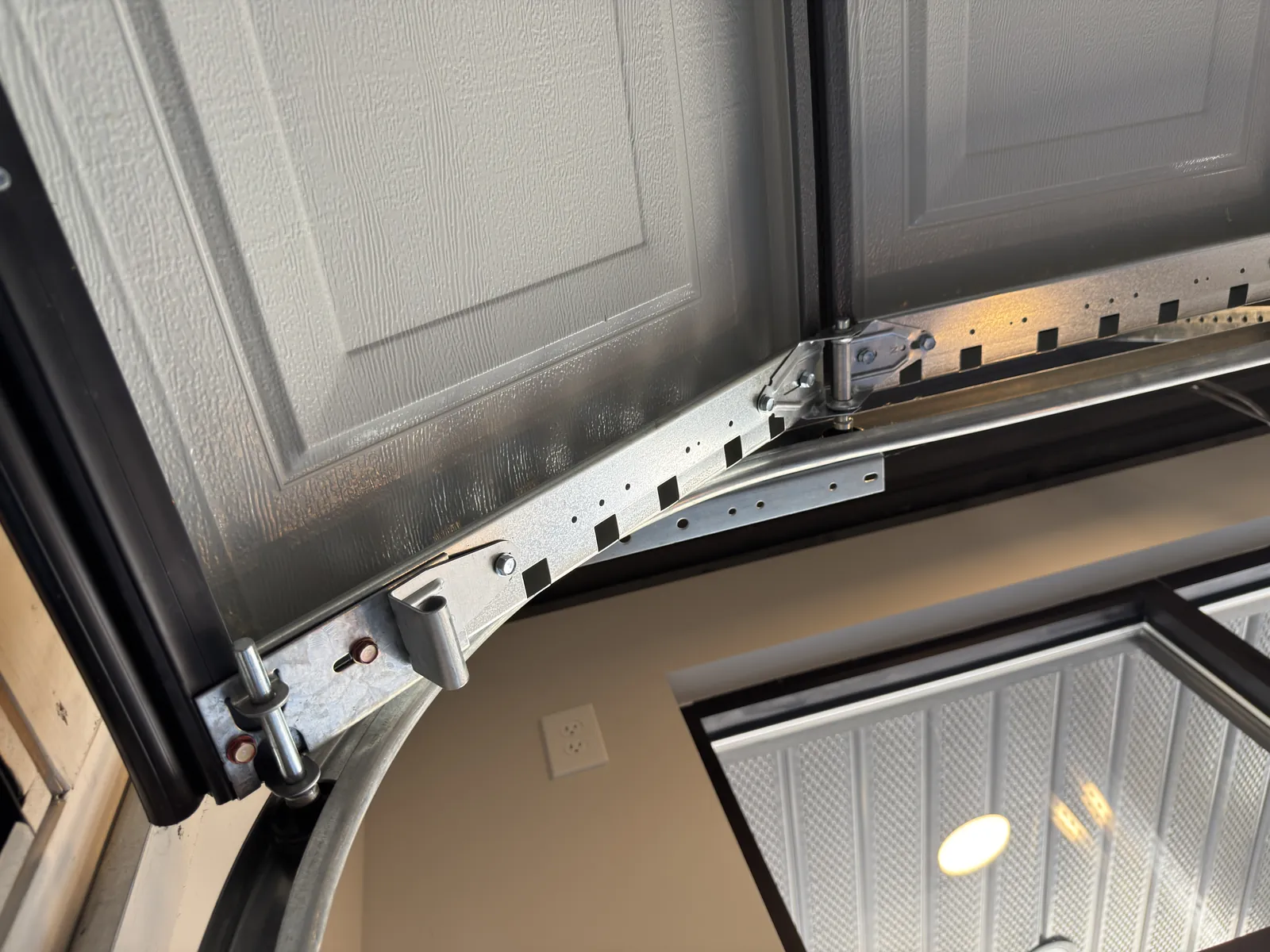
- A detailed visual inspection of all components, including springs, cables, rollers, pulleys, and drums.
- Lubrication of all moving parts, such as hinges and metal rollers, according to manufacturer specifications to ensure smooth, quiet operation.
- Checking and adjusting track alignment and clearing any debris that could impede the door's movement.
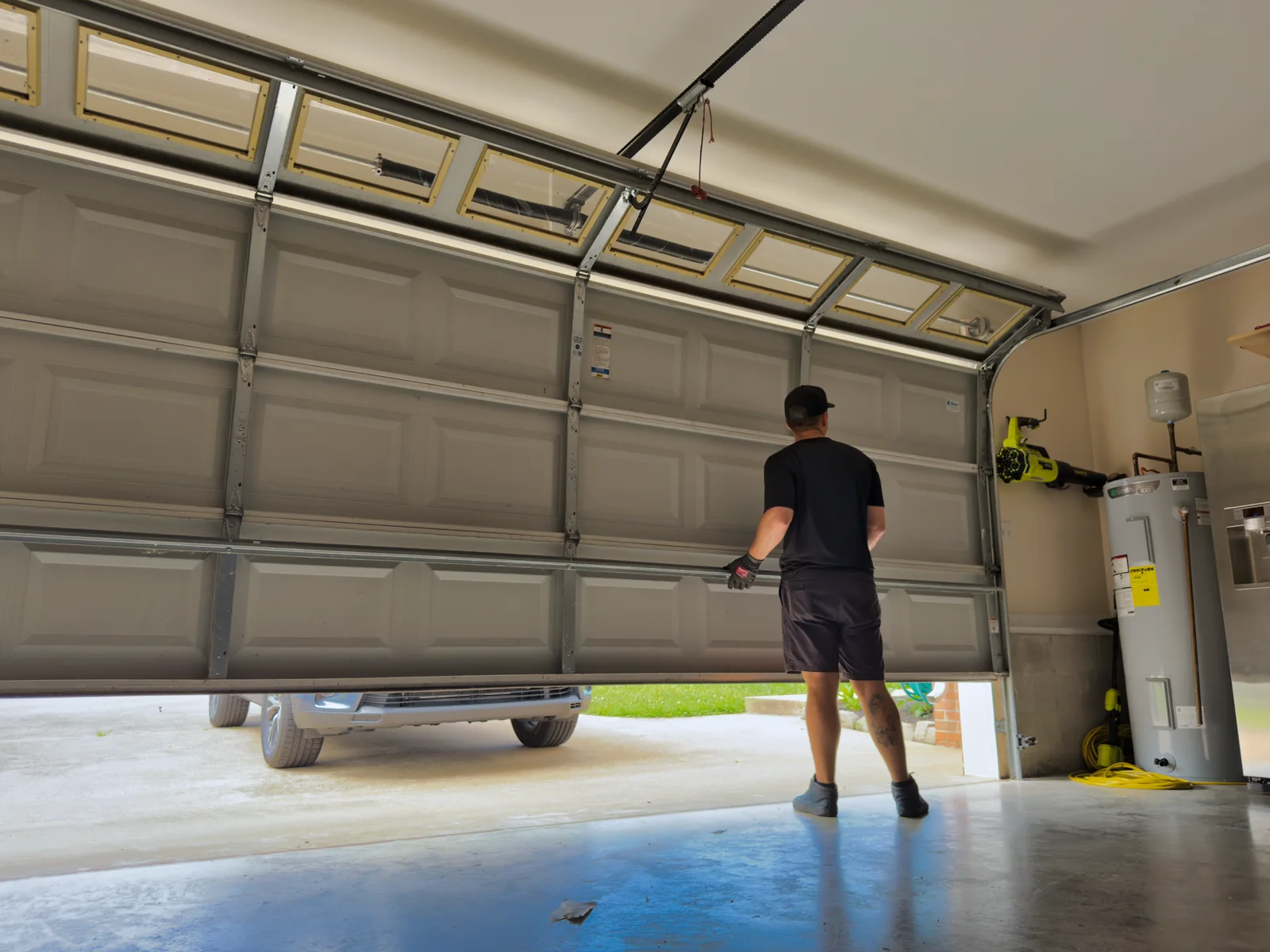
- Testing the door's balance, which is crucial for reducing strain on the opener motor and extending its life.
- Performing a safety inspection, including a test of the auto-reverse mechanism and photo-eye sensors, to confirm they are functioning correctly.
- Examining all hardware and tightening any loose nuts and bolts that have resulted from normal operational vibrations.
- Inspecting the weather seal along the bottom and perimeter of the door for wear, ensuring a proper seal against the elements.
Simple Homeowner Checks Between Service Calls
Between professional tune-ups, there are several safe and simple things you can do to monitor your garage door's health. These routine observations don't require any special tools and are focused on identifying changes in performance. By paying attention to how your door looks and sounds during normal operation, you can catch early warning signs. If you notice anything concerning, stop using the door and contact a professional. Never attempt to adjust, repair, or remove high-tension components like springs or cables yourself.
- Observe and Listen: Take note of the door's movement. Does it move smoothly or is it jerky? Are there new noises like scraping, grinding, or squealing that weren't there before?
- Clear the Path: Regularly ensure the door's path is completely free of objects. Wipe the lenses of the photo-eye sensors with a soft, dry cloth and check that their alignment lights are solid and not flickering.
- Test the Auto-Reverse Feature: Follow the safety-reversal test in your opener's manual, with the test object it specifies, only on a level, undamaged door that moves normally. When the door makes contact, it should immediately reverse. If it doesn't, discontinue use and call for service.
- Visually Inspect for Wear: Look at the weather stripping, rollers, and hinges. Check for visible signs of rust, cracks, or excessive wear. If you spot frayed cables or a gap in a torsion spring, do not operate the door.
What Your Garage Door's Noises Might Mean
Unusual sounds are often the first sign that your garage door needs attention. Learning to recognize these auditory clues can help you know when to call a technician for an inspection. While some noise is normal, a sudden change or a persistent new sound is an alert that a component may be failing.
- Grinding or Squeaking: These sounds often point to worn-out rollers or insufficient lubrication on key pivot points. A professional can identify the source and apply the correct lubricant.
- Loud Banging or Popping: This is a serious warning sign, often indicating an issue with the spring system. Springs are under extreme tension, and a sudden bang could mean one has broken. Stop using the door immediately.
- Rattling: Persistent rattling may indicate that bolts, nuts, or other hardware have become loose from the door's vibration. These should be addressed by a technician to prevent further issues.
- Straining: If the opener motor sounds like it's working harder than usual to lift the door, the door may be out of balance or there could be a problem with the motor itself. This extra strain can lead to premature opener failure.
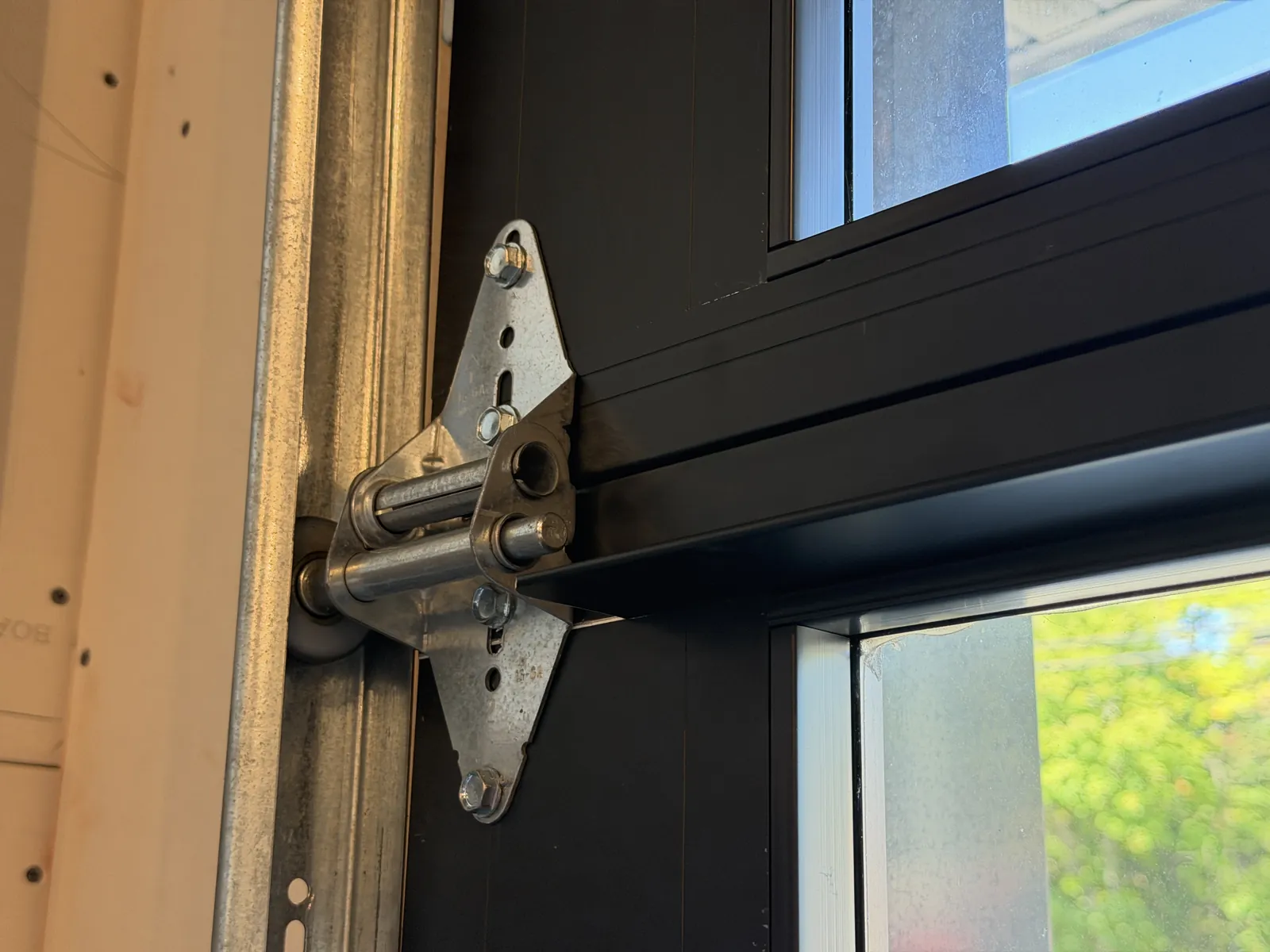
When You Must Stop Using the Door
Safety should always be the top priority. Certain symptoms indicate a severe failure that makes the garage door unsafe to operate. If you notice any of the following conditions, stop using the door immediately, keep people, pets, and vehicles away, and call a qualified technician for repair. Attempting to operate a severely damaged door can lead to a complete collapse, causing serious injury or property damage. Do not try to lift the door manually or pull the emergency release cord, as the door could fall unexpectedly if the spring system is broken.
- A Broken Spring: You may see a visible gap in one of the springs above the door or hear a loud bang. The door will likely be impossible for the opener to lift.
- A Frayed or Broken Cable: The lift cables are critical for lifting the door evenly. If one is broken or frayed, the door will likely appear crooked and be jammed.
- An Off-Track Door: If the rollers have come out of the tracks, the door is unstable and can fall. Do not attempt to force it back.
- A Crooked or Sagging Door: A door that doesn't hang level when partially open is a sign of an unbalanced system, often due to a cable or spring issue.
- Failed Safety Features: If the door does not reverse when it hits an object or when something breaks the photo-eye beam, it is a significant safety hazard.
Check the Opener, Entry Controls, and Supporting Hardware
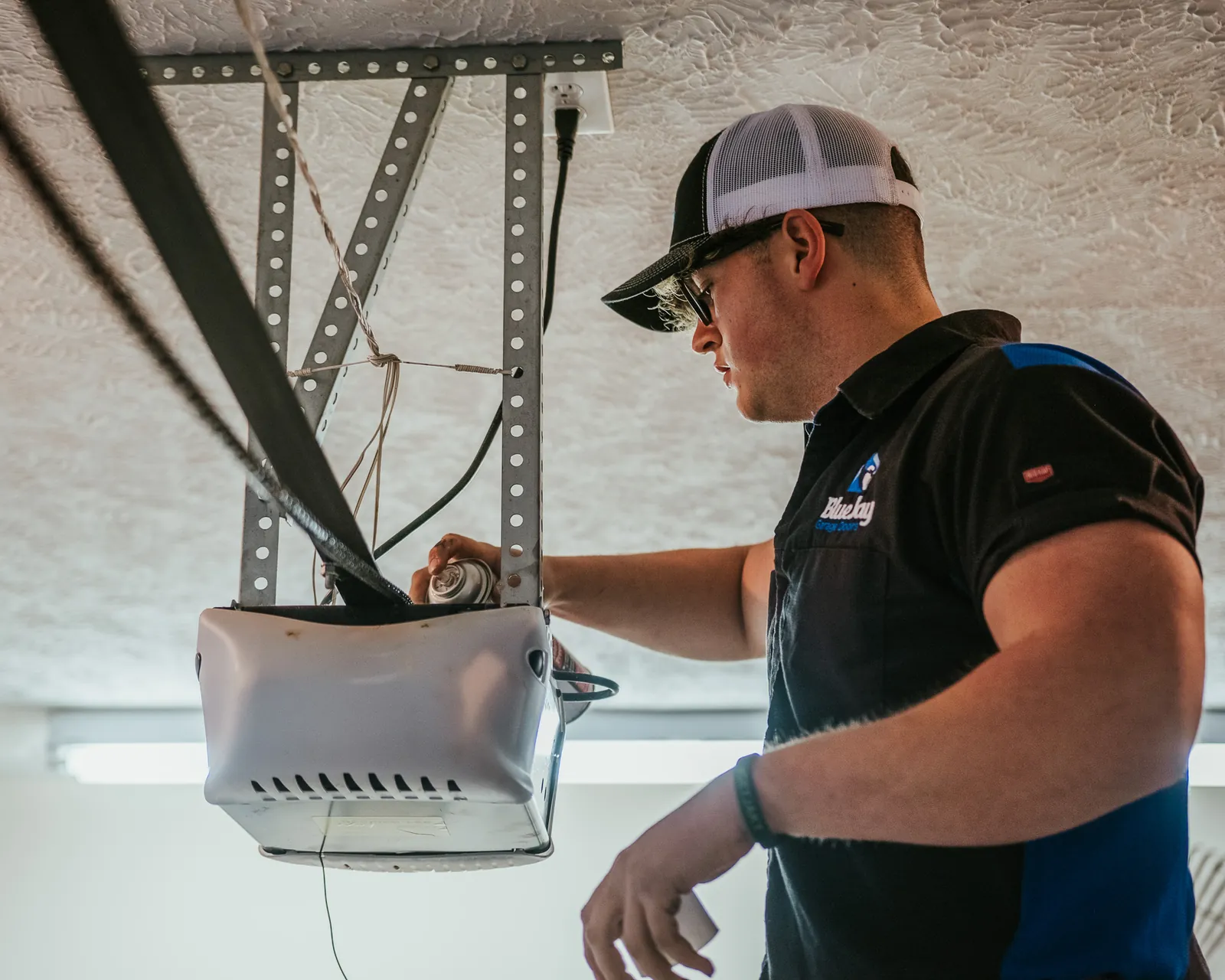
A maintenance visit should look beyond the door’s rollers and springs. Blue Jay’s tune-up also includes checking mounting pads, the opener’s chain or belt, and door locks. These parts help support and control the system; wear or loose supports can affect operation even when the door panels look sound. Keyless entry and other electrical components also deserve attention alongside the safety-reversal checks.
This gives you a chance to understand which components show damage or wear and how those findings relate to the door’s operation, rather than treating maintenance as lubrication alone.