
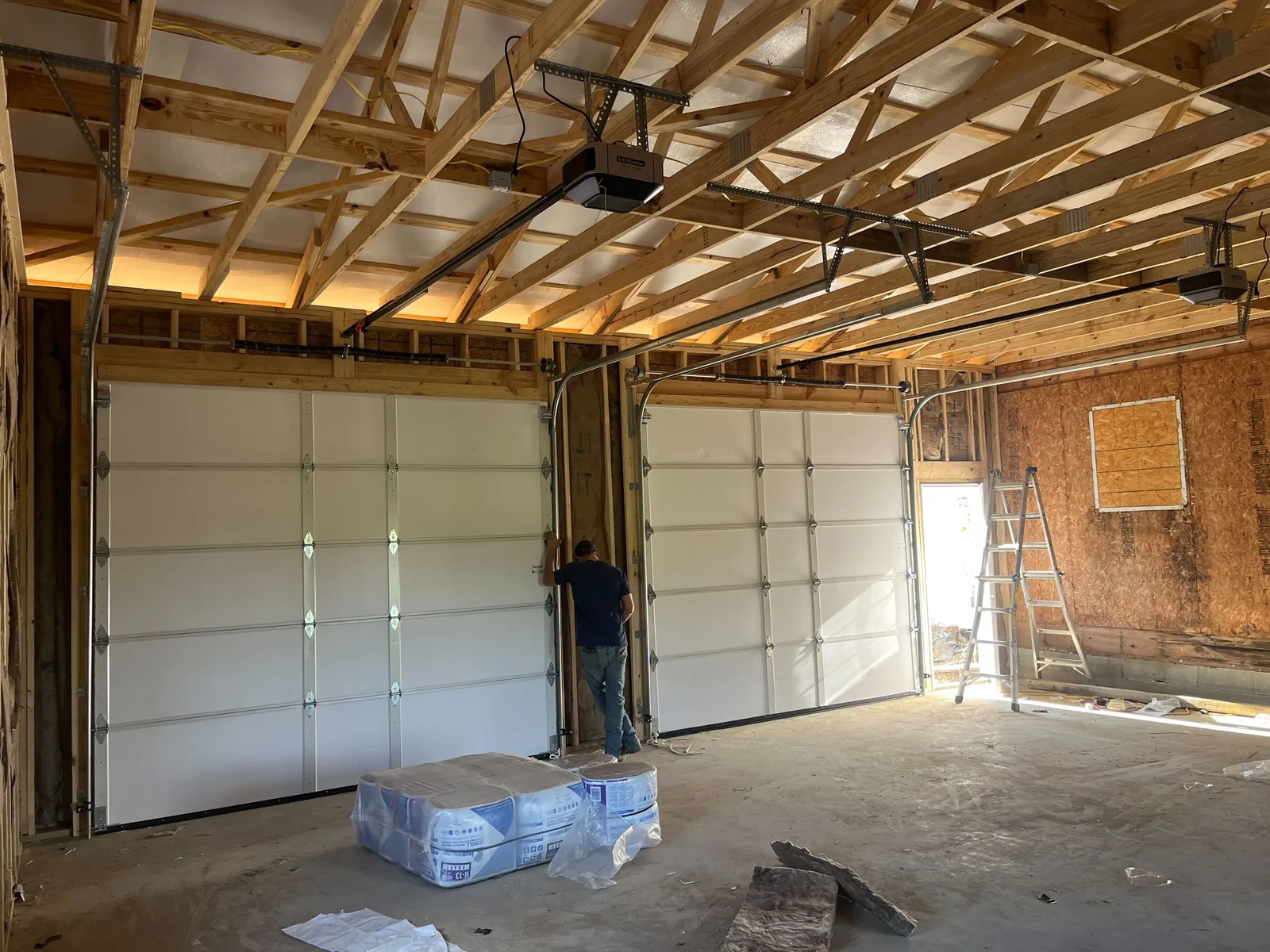
First Steps: Assess the Situation Safely
The most important rule after hitting your garage door is to prioritize safety. The entire system—door, tracks, springs, and opener—is under immense tension, and an impact can compromise its stability in unseen ways. First, turn off your vehicle and make sure everyone is out of the car and away from the garage opening. Do not try to operate the door with the remote or wall button. Attempting to open or close it could cause it to fall, get stuck, or break further, creating a serious hazard. From a safe distance, visually inspect the door. Look for obvious signs of damage like bent panels, a door that is off its tracks, or broken glass. Take photos of the damage to both the door and your vehicle from several angles. This documentation will be useful for your records and for any potential insurance claims.
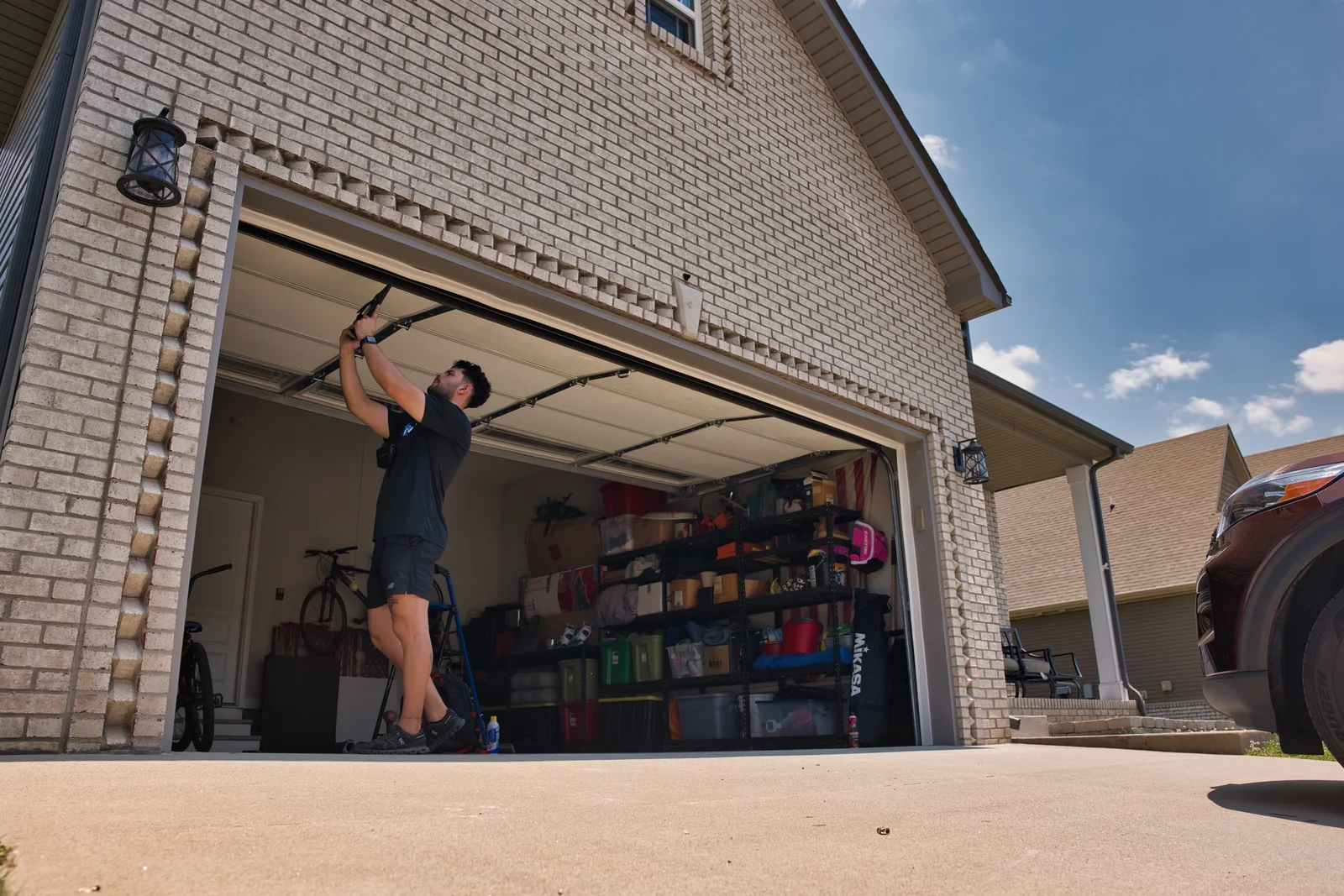
Identifying Common Types of Collision Damage
A collision can cause a wide range of problems, from cosmetic blemishes to critical system failures. Even a slow-speed impact can transfer significant force throughout the garage door system. Understanding the potential issues can help you describe the situation accurately to a technician. While a dent might seem like the only problem, the impact could have bent the tracks, strained the opener, or damaged the sensitive counterbalance system. Never assume the damage is only what you can see on the surface.
- The door is off its tracks: One or more rollers have popped out of the metal tracks, causing the door to hang unevenly or become completely stuck.
- Bent or buckled panels: The impact has created significant dents or creases in one or more door sections, compromising their structural integrity.
- Damaged tracks or hardware: The vertical or horizontal tracks are bent, or hinges and rollers have been broken or knocked loose by the force of the impact.
- The door won't move: The door is jammed in place, either open, closed, or partway, and the opener strains or makes no noise when activated.
- Unusual noises: The impact may have misaligned components that now scrape, grind, or pop when the door attempts to move.
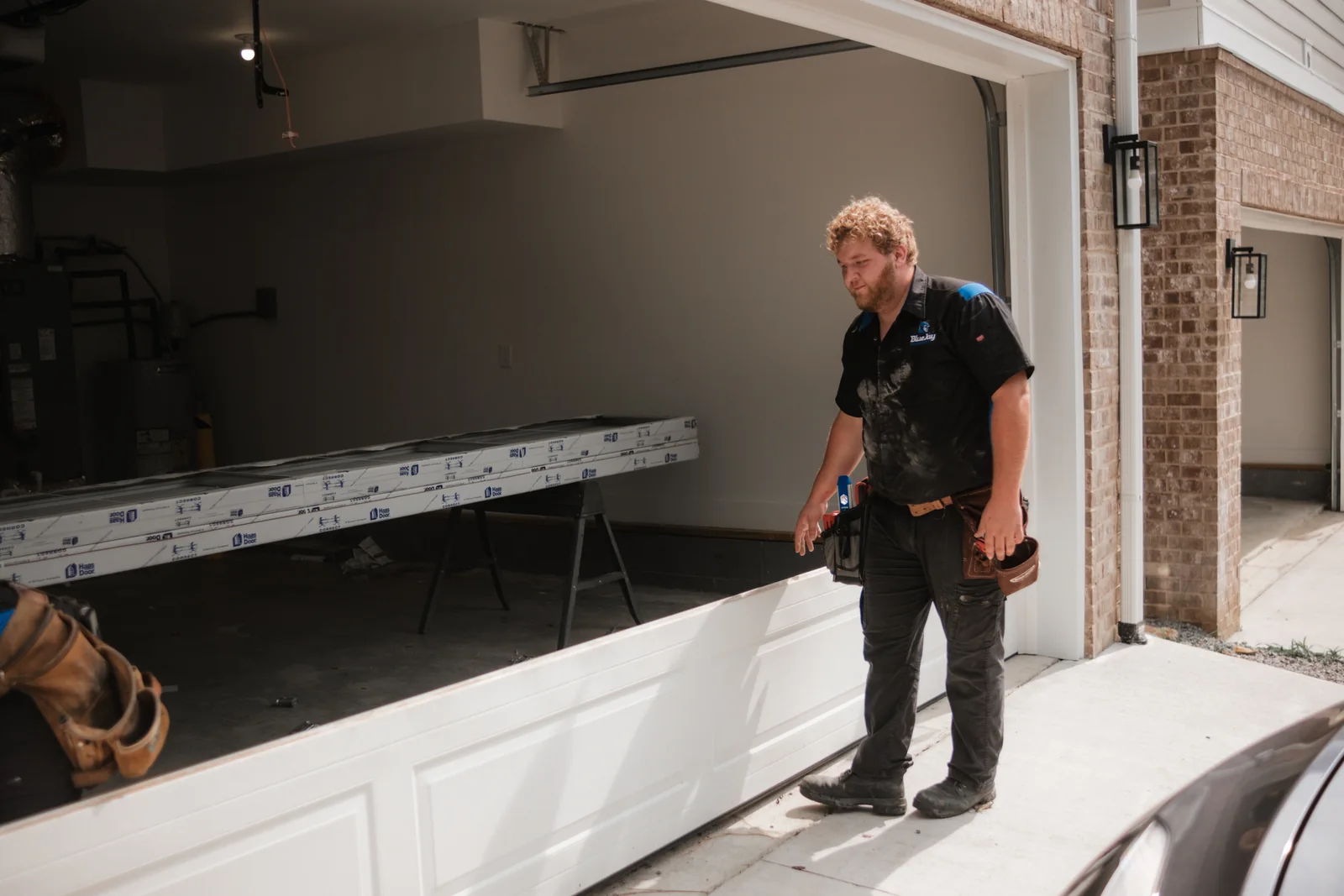
Can a Dented Garage Door Panel Be Repaired?
A common question is whether a dented door needs to be completely replaced. The answer depends on the severity and location of the damage. A single, shallow dent in a panel that doesn't affect the door's movement might be a purely cosmetic issue. However, attempting DIY dent removal often stretches the metal or damages the paint, making the problem worse. For panels with minor damage that still function, a professional technician can sometimes add a steel strut to reinforce the section and prevent it from buckling further under normal operation. If the tongue-and-groove connection between panels is damaged, or if the panel is creased, it can no longer seal properly against weather and may compromise the door's structural integrity. In these cases, a simple repair isn't enough, and the panel itself will likely need to be replaced.
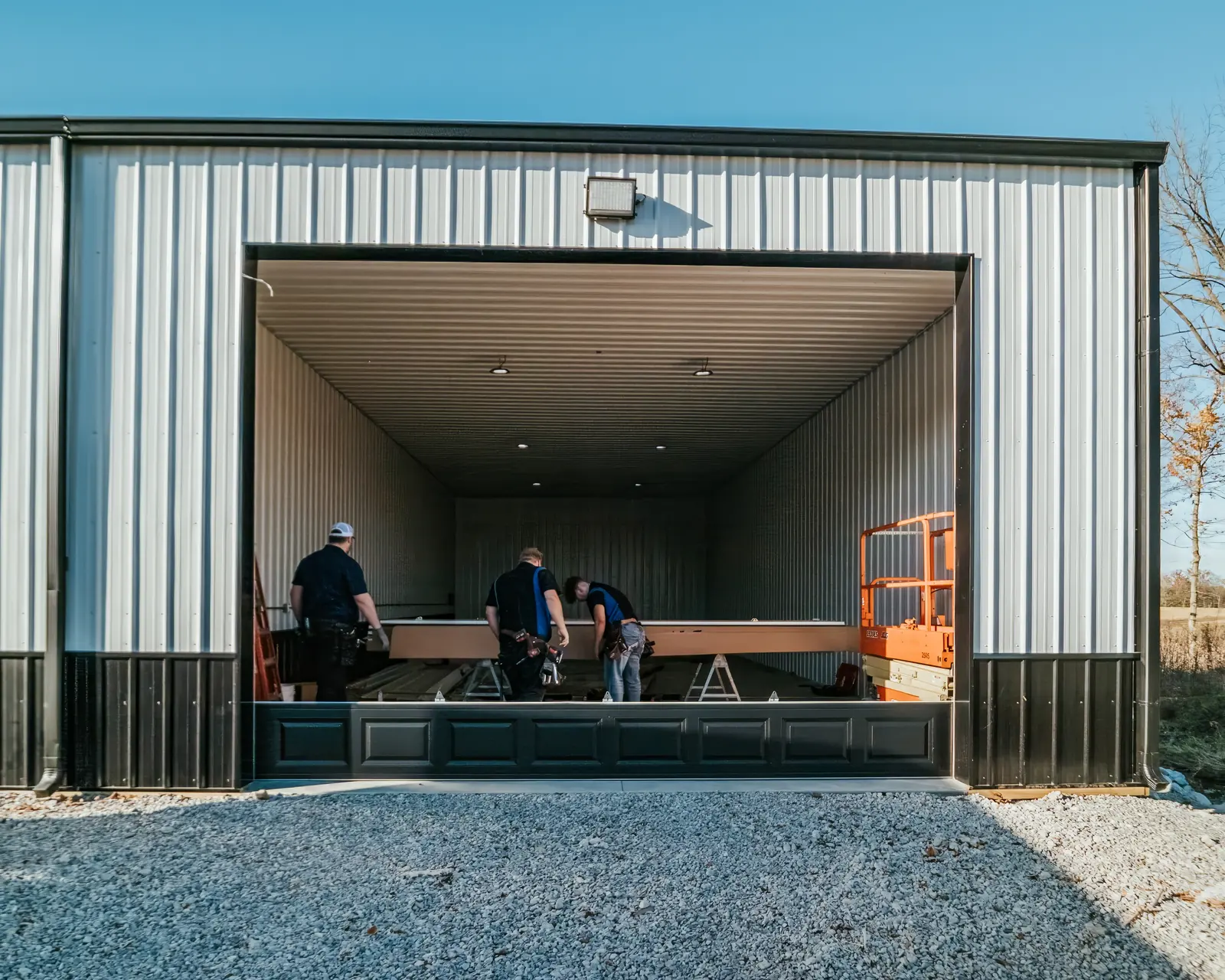
Repair a Panel or Replace the Whole Door?
When damage is significant, you'll face the choice between replacing individual panels or the entire door. If your door is relatively new and only one panel is damaged, sourcing a matching replacement panel can be a cost-effective solution. However, this depends on the door's model and age, as manufacturers periodically update their designs. For older doors, finding an exact match can be difficult or impossible, and a new panel might not align correctly or match in color due to fading on the original sections. If multiple panels are damaged, or if the damage extends to the tracks or the door's frame, replacing the entire garage door is often the safer and more practical long-term investment. A new door ensures all components are new, work together perfectly, and restore the appearance and security of your home.
Navigating Insurance for Garage Door Damage
After an accident involving your car and garage door, you may wonder about insurance coverage. It's wise to contact both your auto and homeowner's insurance providers to understand your policies. Typically, your auto insurance may cover the damage to the garage door since it was caused by your vehicle. Your homeowner's policy might also offer coverage. Be sure to use the photos you took to document the incident for both your personal records and any claims process. A professional repair company can provide a detailed assessment of the damage and a written estimate for the necessary repairs or replacement, which you will need when speaking with your insurance adjuster. Ultimately, the decision to file a claim depends on the extent of the damage, your policy deductibles, and your personal financial situation.