
Smart Technology for Modern Living and Security
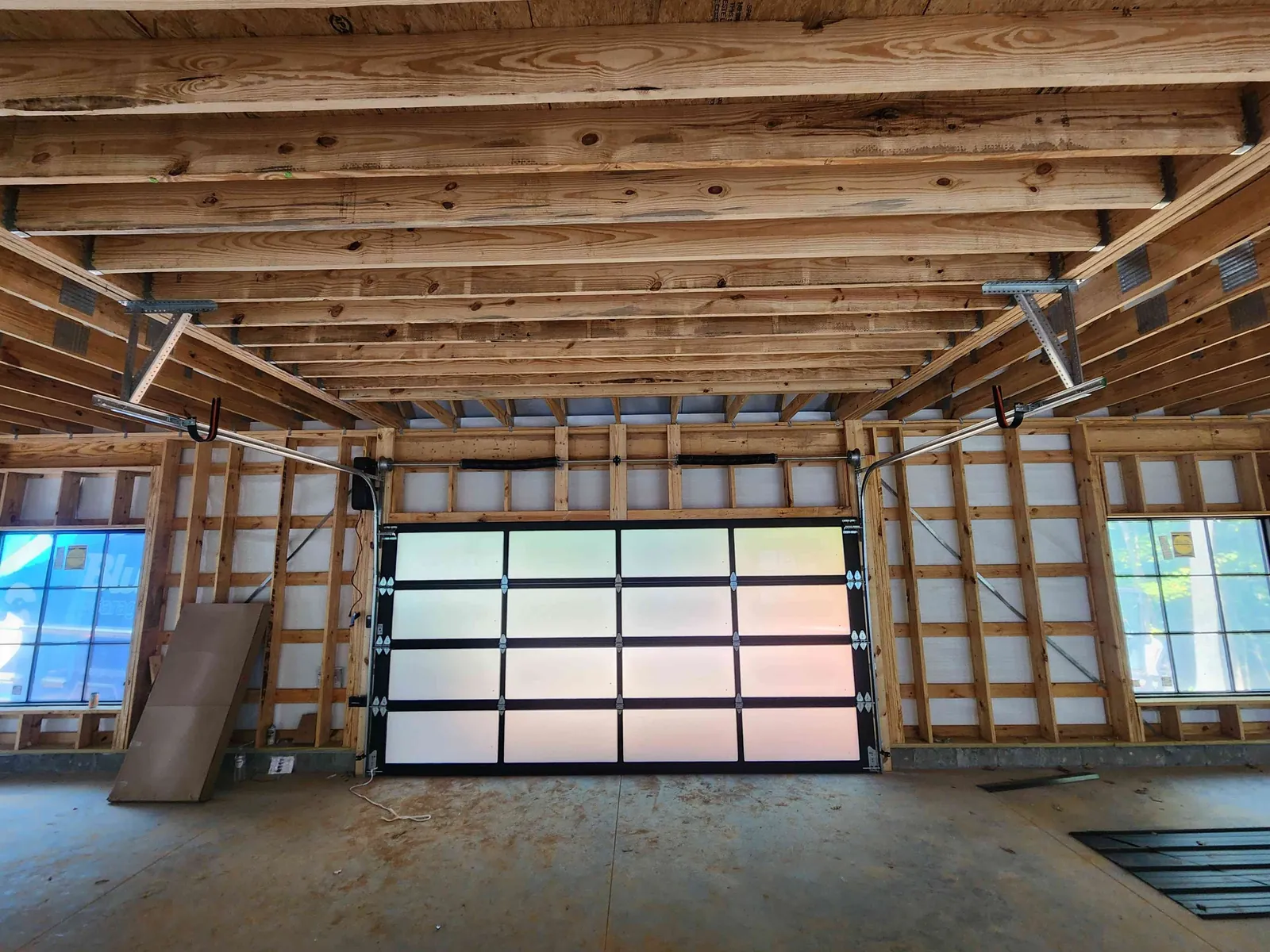
The convenience of a connected home now extends to the garage. Wi-Fi-enabled garage door openers allow you to control and monitor your door from virtually anywhere using a smartphone app. This technology provides peace of mind, letting you confirm your door is closed after you've left the house or open it for a delivery person or family member without sharing a physical remote or key. Many systems also keep a log of when the door is opened and closed, adding an extra layer of security. This connectivity transforms your garage door from a simple entryway into an integrated part of your home's security and access management system.
Materials and Insulation for Durability and Comfort
The material you choose for your garage door affects its appearance, maintenance requirements, and durability. Steel doors are a popular choice, offering strength and a wide range of design possibilities, including wood-grain finishes that provide the look of wood without the upkeep. Natural wood offers unparalleled beauty and a classic, high-end feel but requires more regular maintenance. Composite and vinyl doors are excellent low-maintenance alternatives that resist dents and rust. Beyond the surface material, consider the benefits of an insulated door. An insulated core helps regulate the temperature in your garage, keeping it more comfortable year-round. This is especially valuable if you use the space as a workshop, gym, or if there is a living space above it. Insulated doors also tend to be quieter and more robust than their non-insulated counterparts.
Architectural Styles from Modern to Traditional
A new garage door is an opportunity to complement or redefine your home’s architectural character. From the clean lines of a modern home to the rustic appeal of a farmhouse, there is a door style to match.
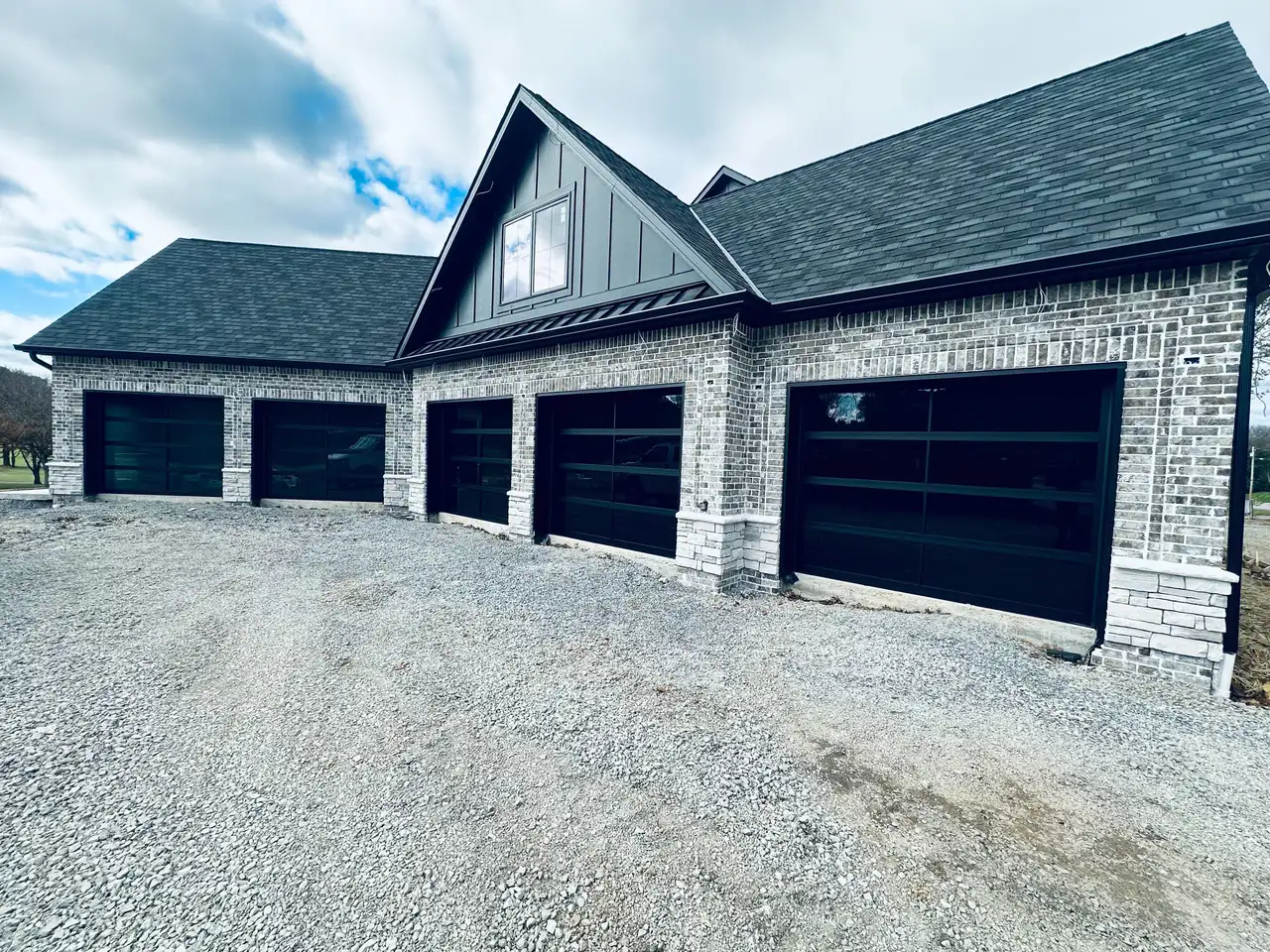
- Modern/Contemporary: Featuring sleek, flush panels and clean lines. Many designs incorporate glass panels, often in asymmetrical layouts, to create a minimalist and striking look.
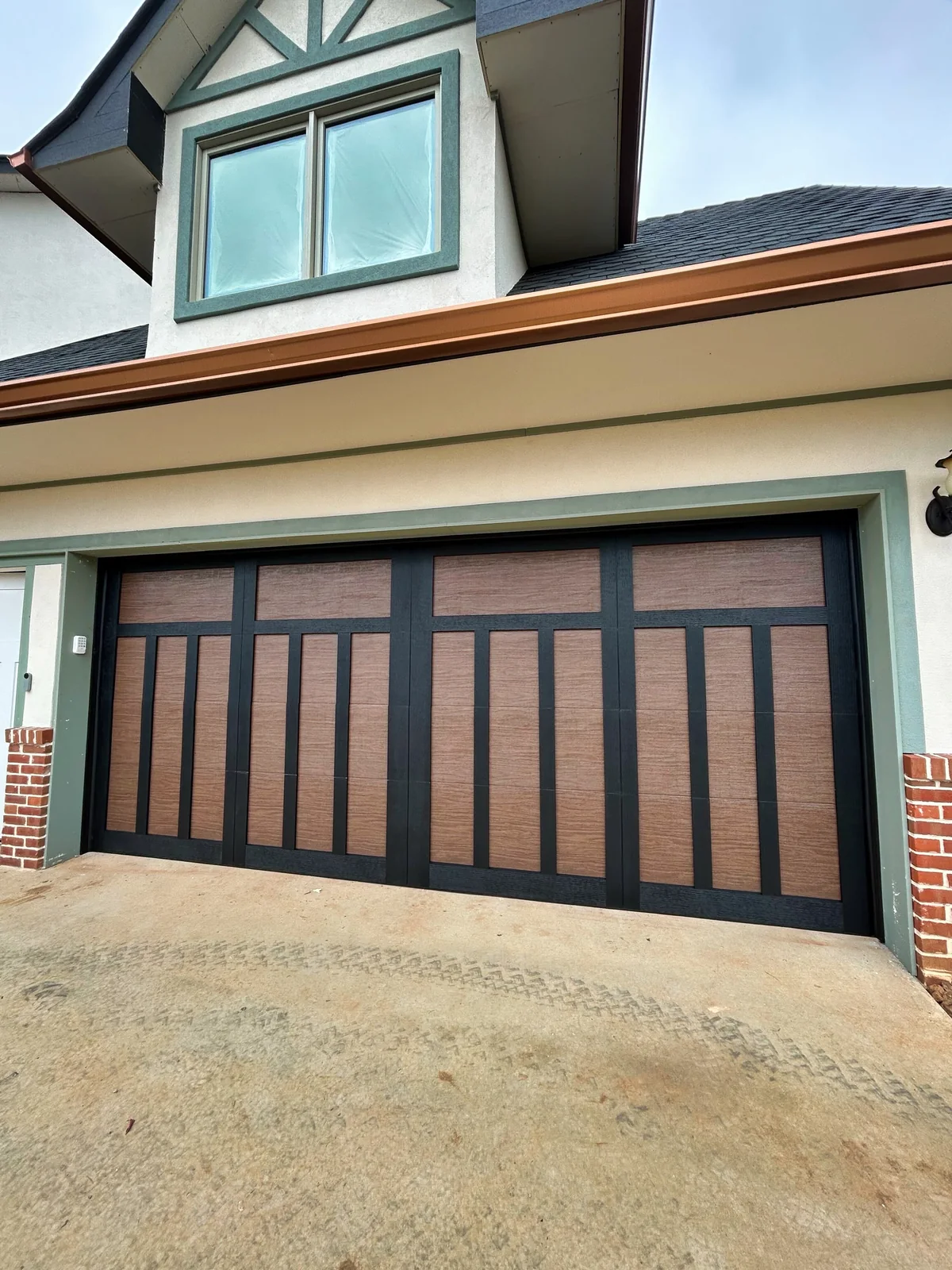
- Carriage House: These doors mimic the look of old-fashioned swing-out doors but operate like a modern overhead door. They are perfect for adding charm to traditional, farmhouse, or craftsman-style homes.
- Traditional: Raised or recessed rectangular panels offer a timeless, familiar look that complements a wide variety of home architectures.
- Full-View Glass: For a bold, ultra-modern statement, full-view doors use aluminum frames with large glass panels to maximize natural light and create a seamless indoor-outdoor connection.
Personalizing with Windows, Color, and Hardware
The details are what make a garage door uniquely yours. Customization options allow you to tailor the final look to your exact preferences. Windows are a great way to add character and bring natural light into your garage. They can be arranged in a traditional top row or in vertical columns on the side for a more contemporary feel, with glass options ranging from clear to frosted or obscure for privacy. Color plays a huge role in curb appeal. While classic whites and neutrals are always in style, bold colors can make a statement, and realistic wood-grain finishes offer warmth and texture. Finally, decorative hardware like handles and hinges can complete the look, providing the perfect finishing touch for carriage house or traditional style doors.
Understanding Your Door's Built-In Safety Features
Modern garage door openers are equipped with critical safety features that protect people, pets, and property. It's important for every homeowner to understand how they work. The primary system includes a pair of photo-eye sensors mounted a few inches off the floor on either side of the door opening. If the infrared beam between these sensors is broken while the door is closing, the door will automatically reverse. The second safety feature is the auto-reverse mechanism within the opener itself, which detects resistance. If the door contacts an object while closing, it should immediately reverse direction. You should test these features regularly according to your owner's manual. Follow the safety-reversal test in your opener's manual, with the test object it specifies, only on a level, undamaged door that moves normally. Proper function is non-negotiable for a safe home.
- STOP using the door immediately and keep people and vehicles clear if you suspect a broken spring or cable. These parts are under extreme tension and are dangerous.
- NEVER try to force a stuck, crooked, or damaged door open or closed. This can cause more damage and create a hazardous situation.
- NEVER tell anyone to run or duck under a moving garage door. Treat it with the same caution as any heavy moving machinery.
- DO visually inspect your photo-eye sensors. Make sure they are aligned (indicator lights are typically solid) and the lenses are clean.
- DO perform the monthly auto-reverse safety test with a soft object as described in your opener's manual. If it fails, discontinue use and call a professional.
Sustainable Materials Beyond the Surface Finish
If environmental impact is part of your decision, consider recycled steel or sustainably sourced wood alongside appearance, insulation, and maintenance needs. A wood-look finish describes how a door looks, not where its materials come from. Ask about the material sourcing of the door you are considering rather than assuming its appearance makes it a sustainable choice.
Smart Access Features Worth Comparing
Smart-door options can extend beyond smartphone control to voice-assistant integration, remote locking, and temporary access codes. These features vary by system, so check compatibility and available controls before choosing an opener. Temporary codes can let you grant access without sharing your regular entry code, while remote locking offers another way to manage access when you are away.