
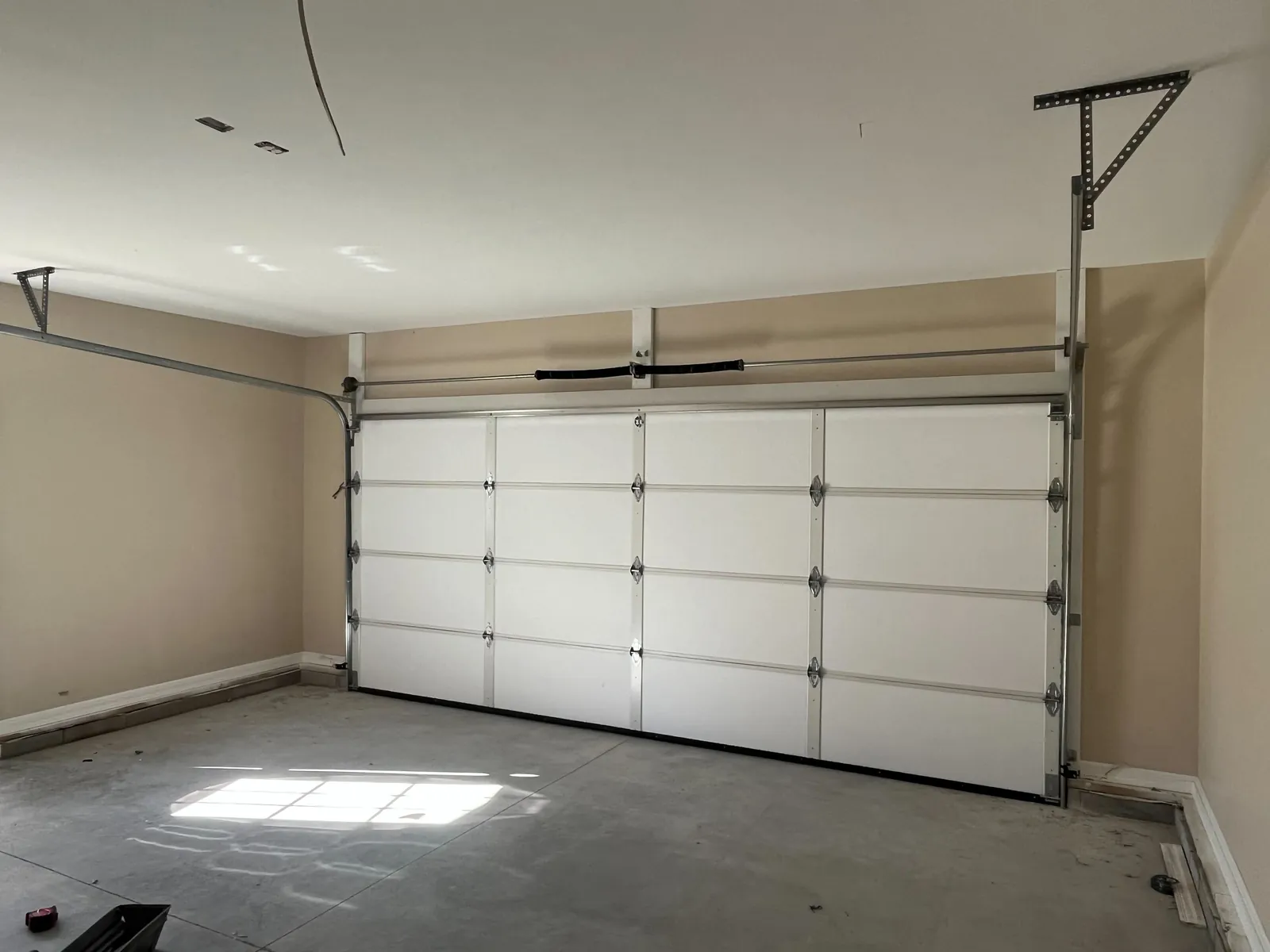
Note when the door reverses
A door that starts down and then returns upward is different from one that never begins moving. Use the timing you have already observed when describing the issue: immediately after starting, partway down or after reaching the floor. Do not repeatedly test an unsafe door to reproduce the problem.
A blocked photo-eye path or physical resistance can be involved in a reversal. Check the opening from a safe distance and keep people, pets and stored items clear. The door and opener need to be considered together before deciding which part requires attention.
If the door stops and stays above the floor, use our guide for a door that stops short of the floor instead.
- Note whether the reversal happens immediately or later in travel.
- Mention any diagnostic message or light pattern already observed.
- Check the sensor path for loose objects while the door is stationary.
- Use the model’s manual for indicator meanings; do not bypass sensors.
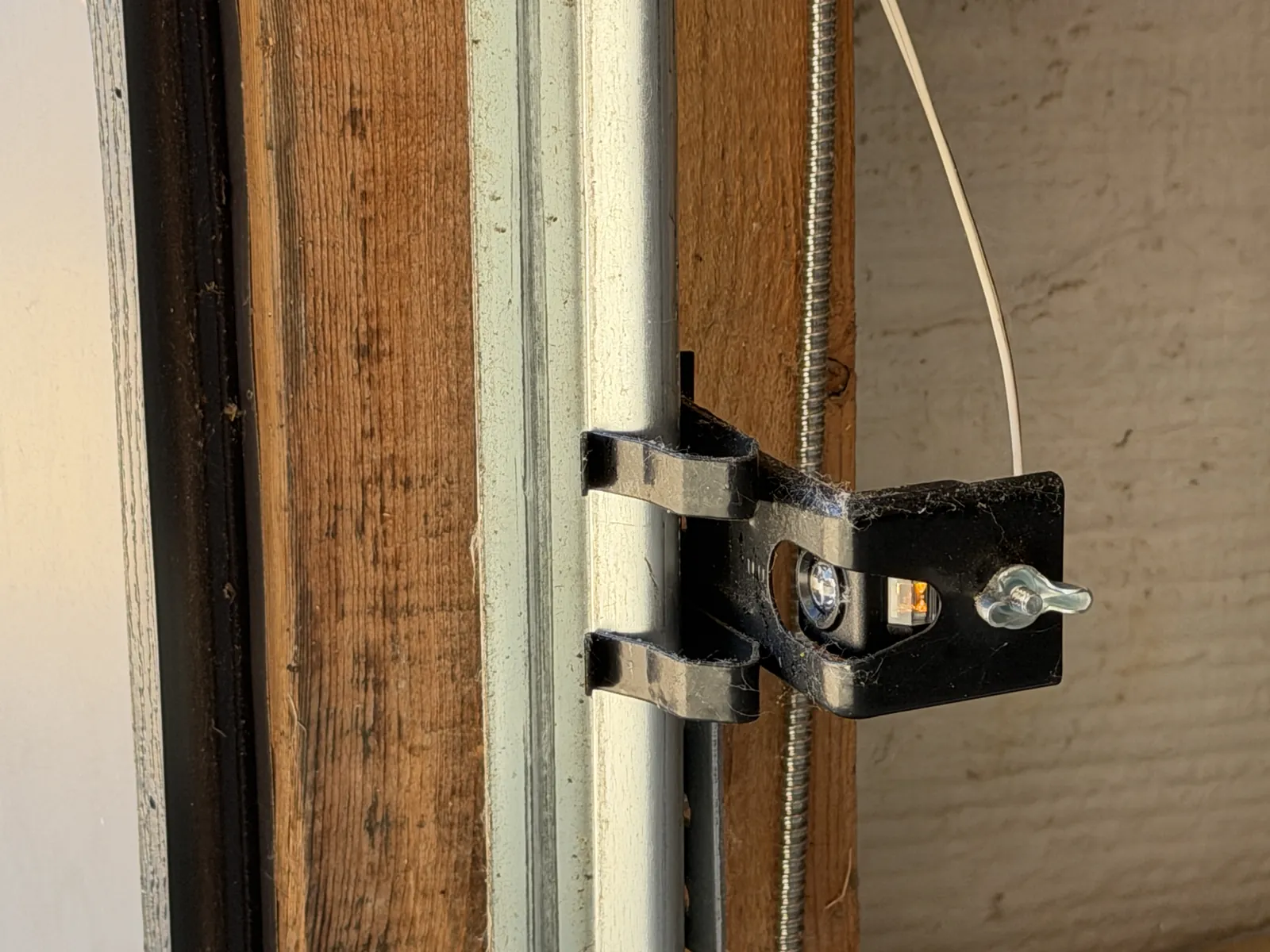
Reversing at the same point can involve resistance
If the reversal repeatedly occurs at the same position, describe that location and any scraping, jerking or visible track damage you have already noticed. Loose objects in the opening may be visible, but binding, damaged rollers or a bent track need professional assessment.
Remove only loose floor obstructions when it is safe. Keep hands and tools away from moving parts, and do not bend tracks, loosen brackets or increase opener force to push the door through resistance. Stop using the door if it is crooked or appears damaged.
- Keep the area beneath the door clear.
- Observe visible damage without dismantling anything.
- Do not operate a damaged door again to gather a recording.
- Leave track, roller and balance repairs to a technician.
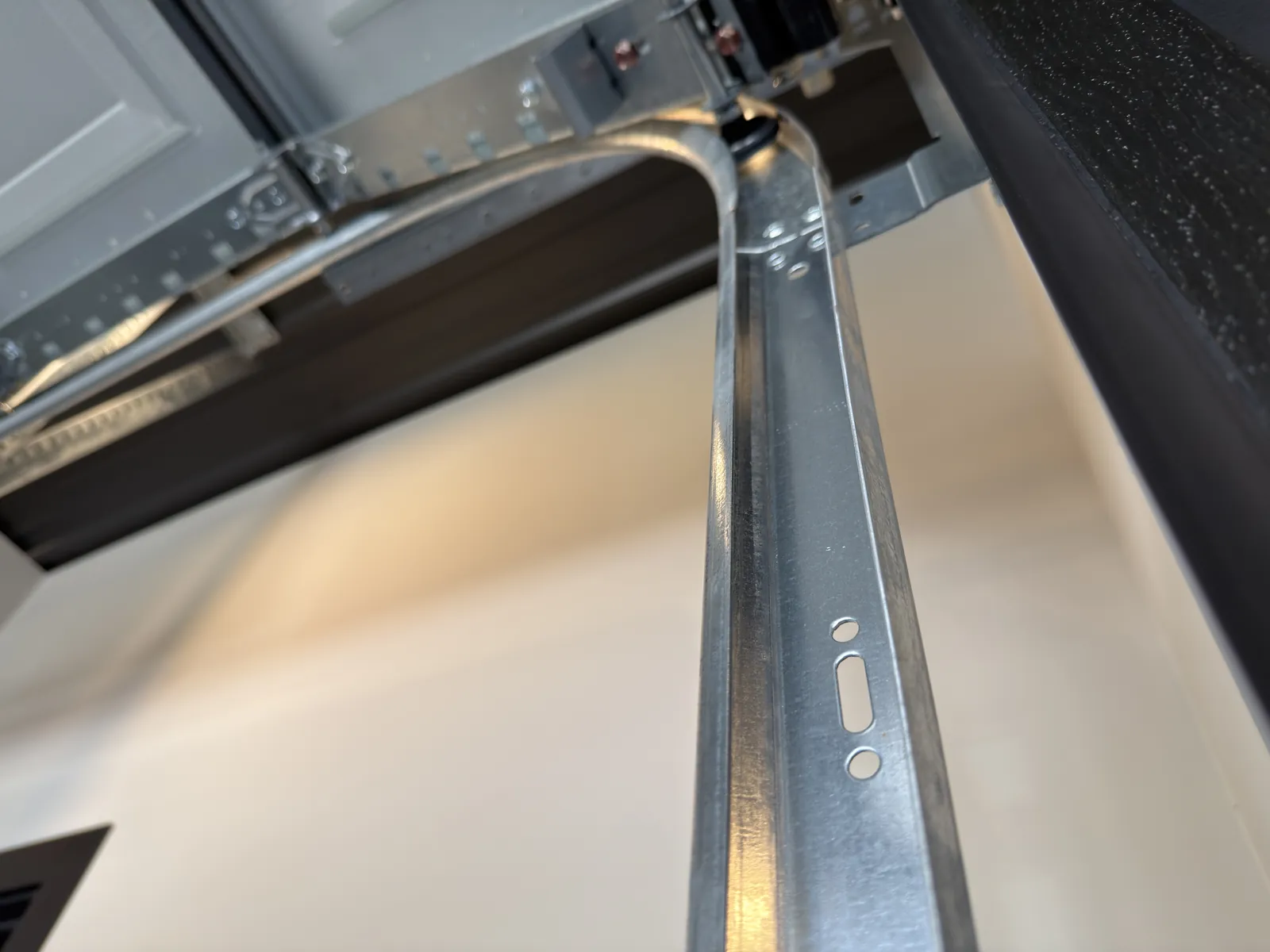
Reopening after floor contact needs a setup check
Tell the technician if the door reaches the floor before it goes back up. That differs from a reversal high in the opening and helps focus the inspection. The opener’s stopping setup, the way the door meets the floor and the door’s movement should be assessed together.
Do not change travel or force settings by trial and error. These settings affect the safety reversal system, and adjustments must be followed by the checks required for the specific opener. A setting change should never be used to compensate for mechanical damage or binding.
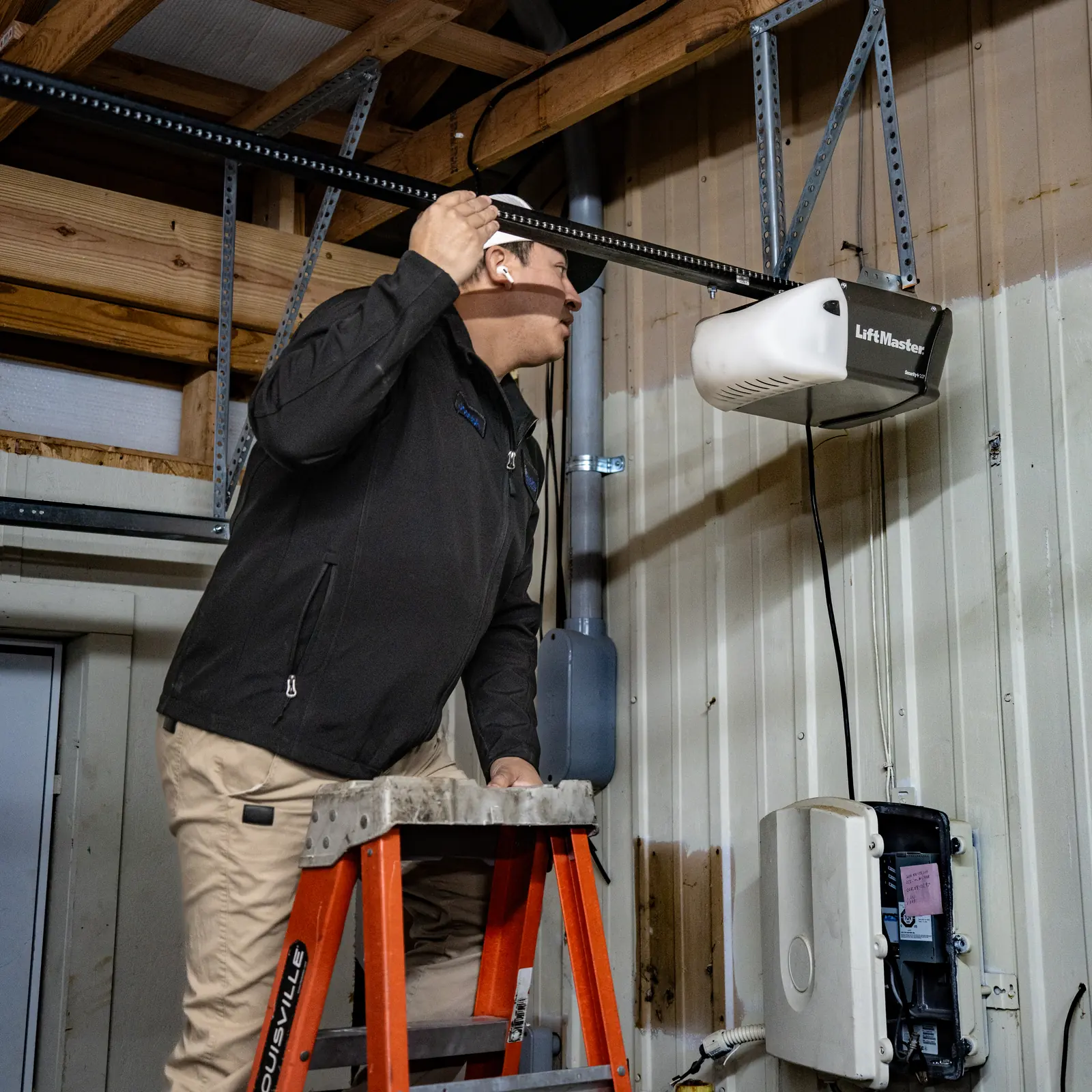
Stop for spring, cable or track warning signs
A loud bang, a visible gap in a spring, a loose or frayed cable, an uneven door or a door off its track are reasons to stop using the system. High-tension components support a heavy door; a control or sensor check does not make damaged hardware safe.
Keep everyone clear, do not pull the emergency release or try to lift the door by hand, and call for professional help. We inspect the whole system and explain the recommended work before you decide what to authorize.