
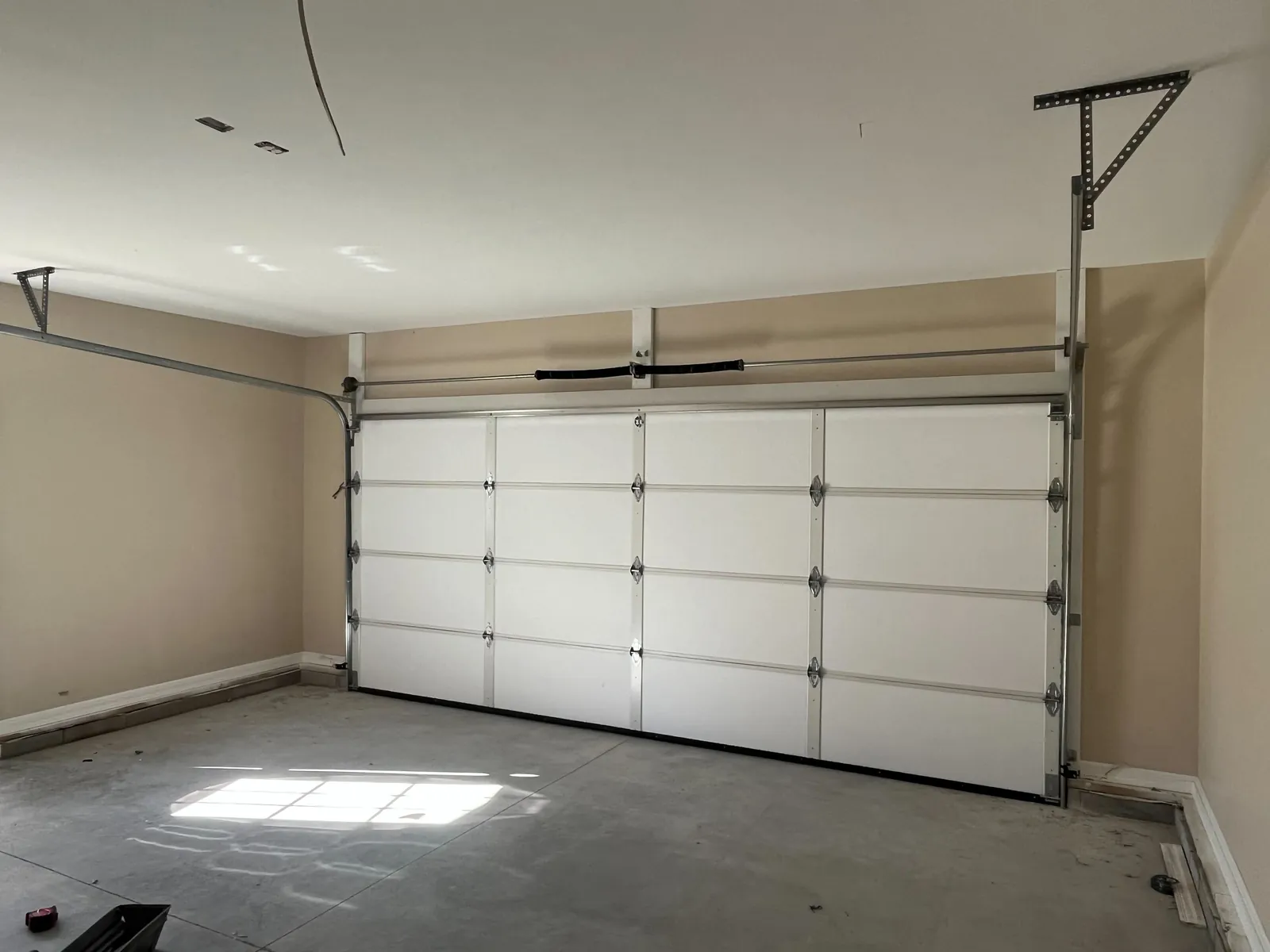
Start with the gap and the door’s condition
Look from a safe distance at the space below the stopped door. Is the gap even across the opening, or is one side higher? An uneven or crooked door needs professional assessment. Do not force it down, pull the emergency release, or try to lift it by hand when a spring, cable or track problem may be involved.
If the door is straight and shows no signs of damage, note whether it stops at the same place and stays there. Describe that observation when arranging service; the position alone does not identify which part has failed.
If your door refuses to start closing, follow our control-and-sensor guide. If it starts down then reverses, use the reversal guide.
Look for visible obstructions without moving the door
Check the opening and the visible track area for loose items that could obstruct travel. Keep hands and tools away from the rollers and moving hardware. You can remove loose objects from the floor when it is safe to do so, but do not bend a track, loosen a bracket or dismantle the door to clear a problem.
A persistent gap may involve the opener’s travel setup, door movement or the condition of the system. Repeatedly pressing the control or pushing on the door will not establish which repair is needed. If the door binds, jerks or makes grinding noises, stop using it and call.
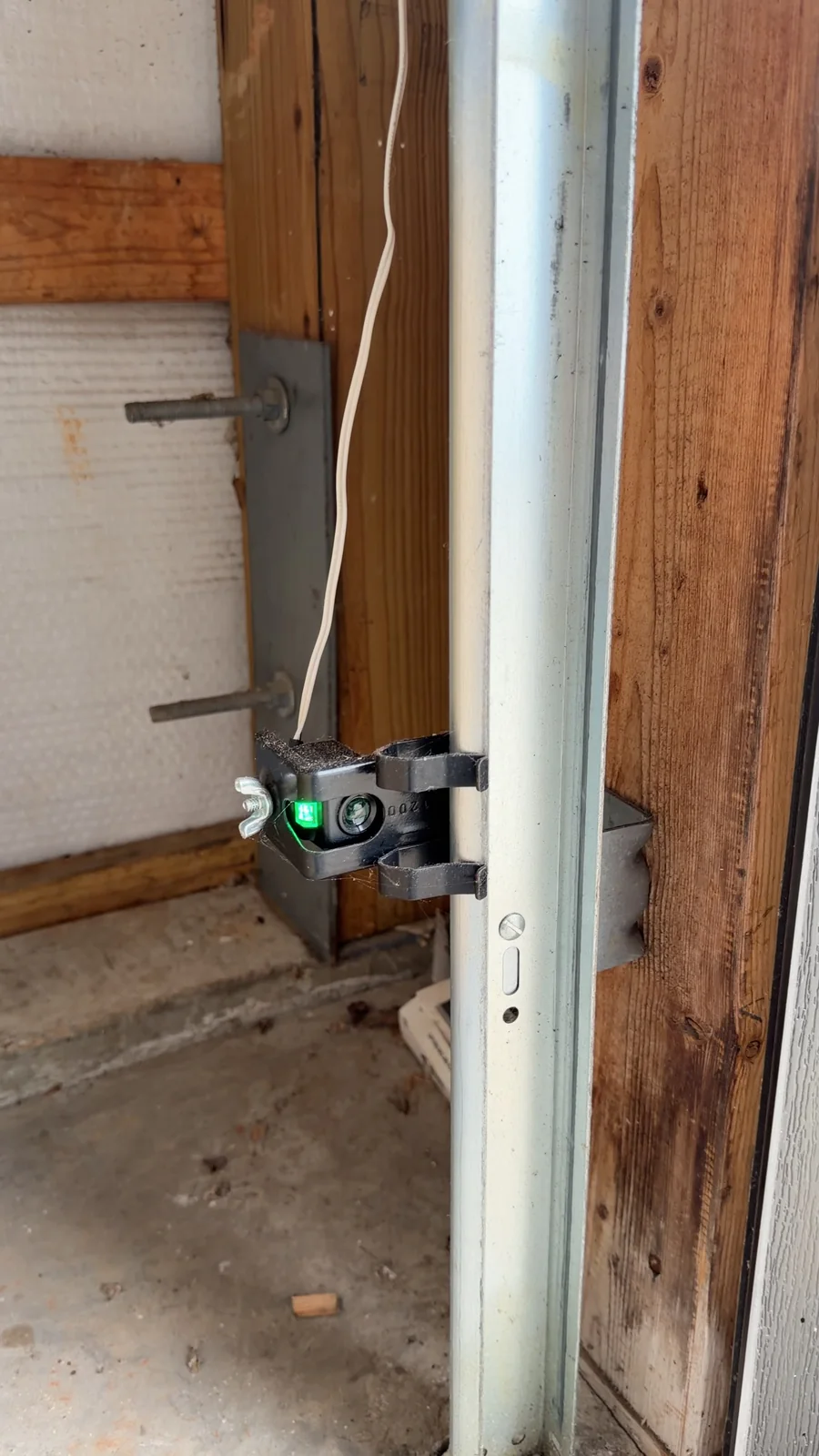
Check the sensor area using your model’s guidance
Safety sensors remain part of the closing system even when the visible complaint is a gap. With the door stationary and the area clear, look for objects in the sensor path and gently wipe accessible lenses with a soft, clean cloth.
Indicator colors and flash patterns vary by opener model. Use your specific manual to interpret them and follow only the owner checks it describes. Do not assume that a steady light proves the whole door is safe, bypass a sensor, or adjust wiring to make the door close.
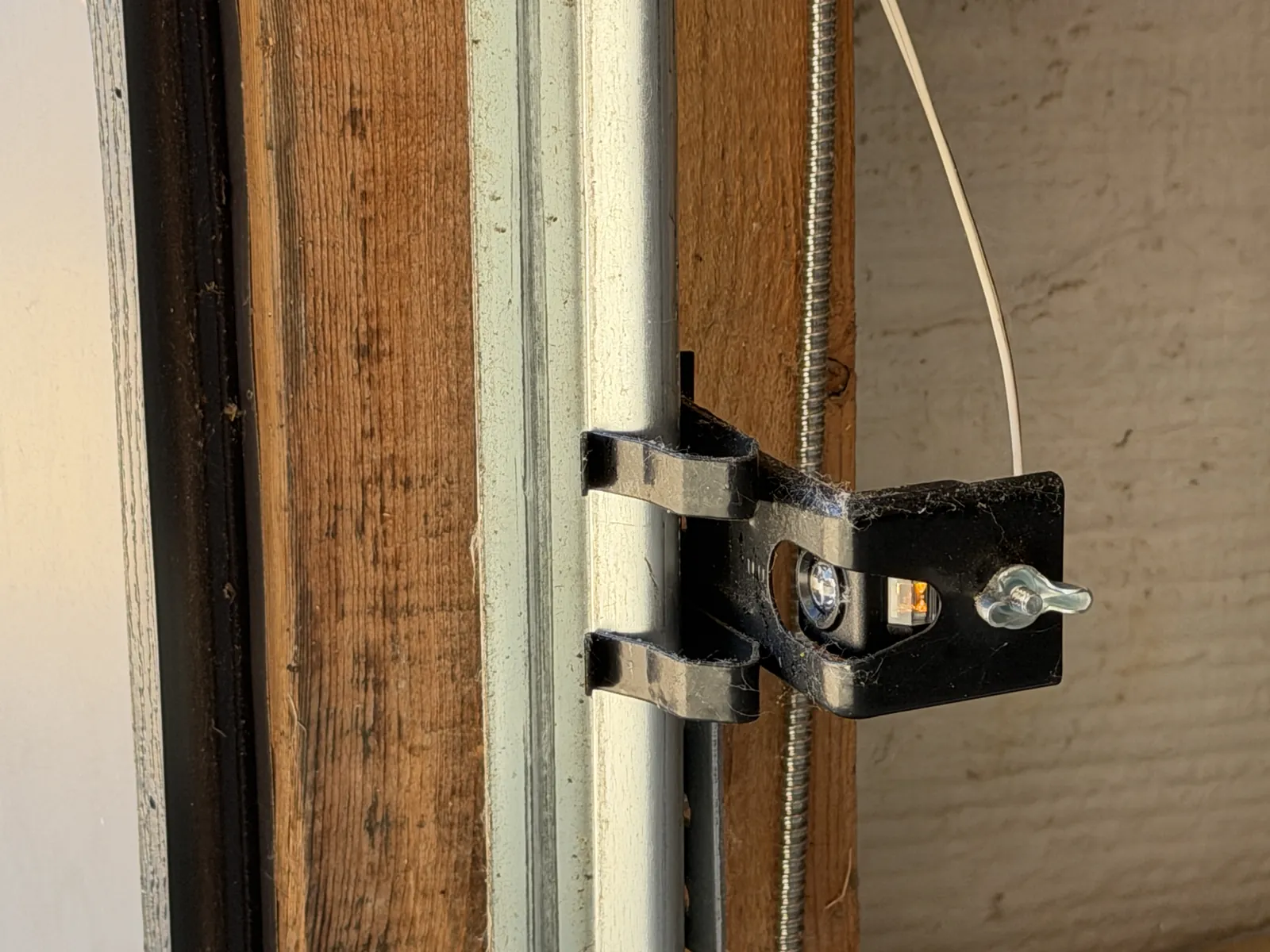
Leave travel and force adjustments to a technician
The opener’s travel setup determines its stopping positions. A technician can check that setup alongside the door’s movement and balance before deciding whether an adjustment is appropriate. A travel setting should not be used to compensate for a door that is binding or damaged.
Force and travel changes affect the safety reversal system. We check the door and opener together rather than treating the remaining gap as permission to turn an adjustment screw. After corrective work, the system needs the safety checks specified for that model.
An uneven gap can point beyond the opener
Door sections, rollers, tracks, springs and cables all affect how the door moves. A damaged panel, bent track or counterbalance problem may prevent an otherwise functioning opener from moving the door correctly. A new bottom seal will not correct a crooked or mechanically restricted door.
Keep the door out of use if one side hangs lower, a cable is loose or frayed, a spring shows a gap, or the door has come off its track. Keep people, pets and vehicles clear until a professional has assessed it.
- One side stops higher than the other.
- The door binds or jerks at a particular point.
- A roller or section appears out of line.
- A cable is loose, frayed or broken.
- You heard a bang before the closing problem began.
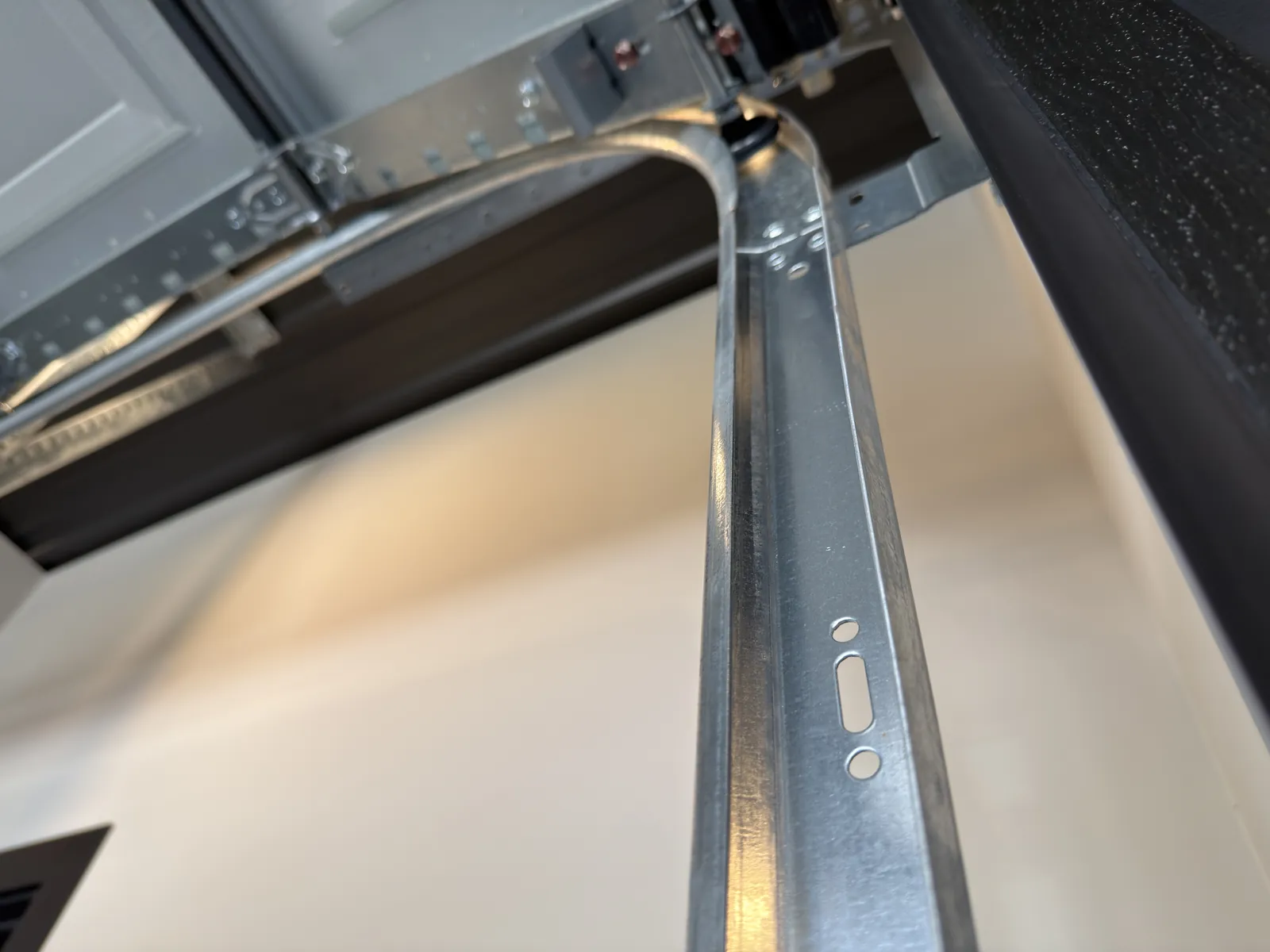
A floor gap and a worn seal need different repairs
If the panels reach their normal closed position but the weather seal is visibly worn or damaged, describe that separately from a door that stops above the floor. The repair may involve the seal, the door’s fit or another part of the opening; inspection establishes the appropriate scope.
After a repair, follow the opener manufacturer’s routine safety-test instructions. A door that will not close properly needs diagnosis before routine testing. Do not attempt a reversal test on a crooked or damaged door.
What to tell us about a door that stops short
Tell us whether the door stays above the floor or goes back up, whether the gap is even, and whether the issue began after an impact or other change. Note any light pattern, display message or sound already observed. There is no need to operate an unsafe door again to gather details.
The opener model, approximate age and any recent work help us prepare. We inspect the door’s condition and explain the recommended work before you decide how to proceed.
Notice patterns without repeatedly testing the door
If you have already noticed that the problem changes with sunlight, weather or time of day, mention that when you call. A pattern is useful context for the technician; it does not replace checking the door and opener together.
Call for immediate service if you need help securing access. If the door is damaged or stuck, keep the area clear while you arrange professional assistance.