The Dangers of DIY Garage Door Installation
Your garage door is the largest moving object in your home, with some models weighing several hundred pounds. The most critical safety risk comes from the spring system. Both torsion and extension springs are under enormous tension to counterbalance the door's weight. If handled improperly without the correct tools and training, a spring can release its stored energy uncontrollably, causing severe injury or property damage. For this reason, homeowners should never attempt to adjust, remove, or install garage door springs, lift cables, or bottom brackets. A mistake during any part of the installation can lead to a door that falls unexpectedly, creating a dangerous situation for people and vehicles.
Specialized Tools and Mechanical Precision Required
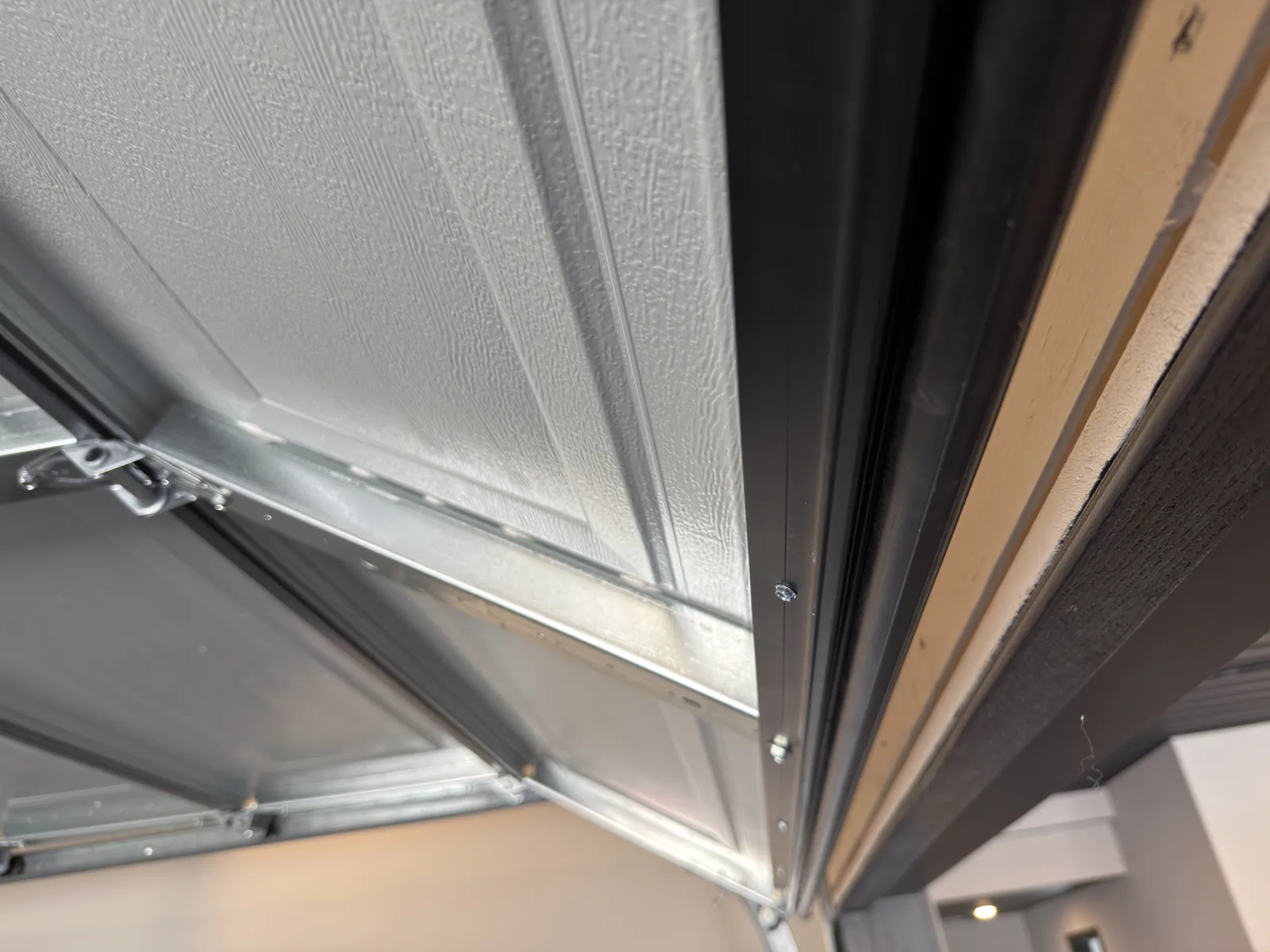
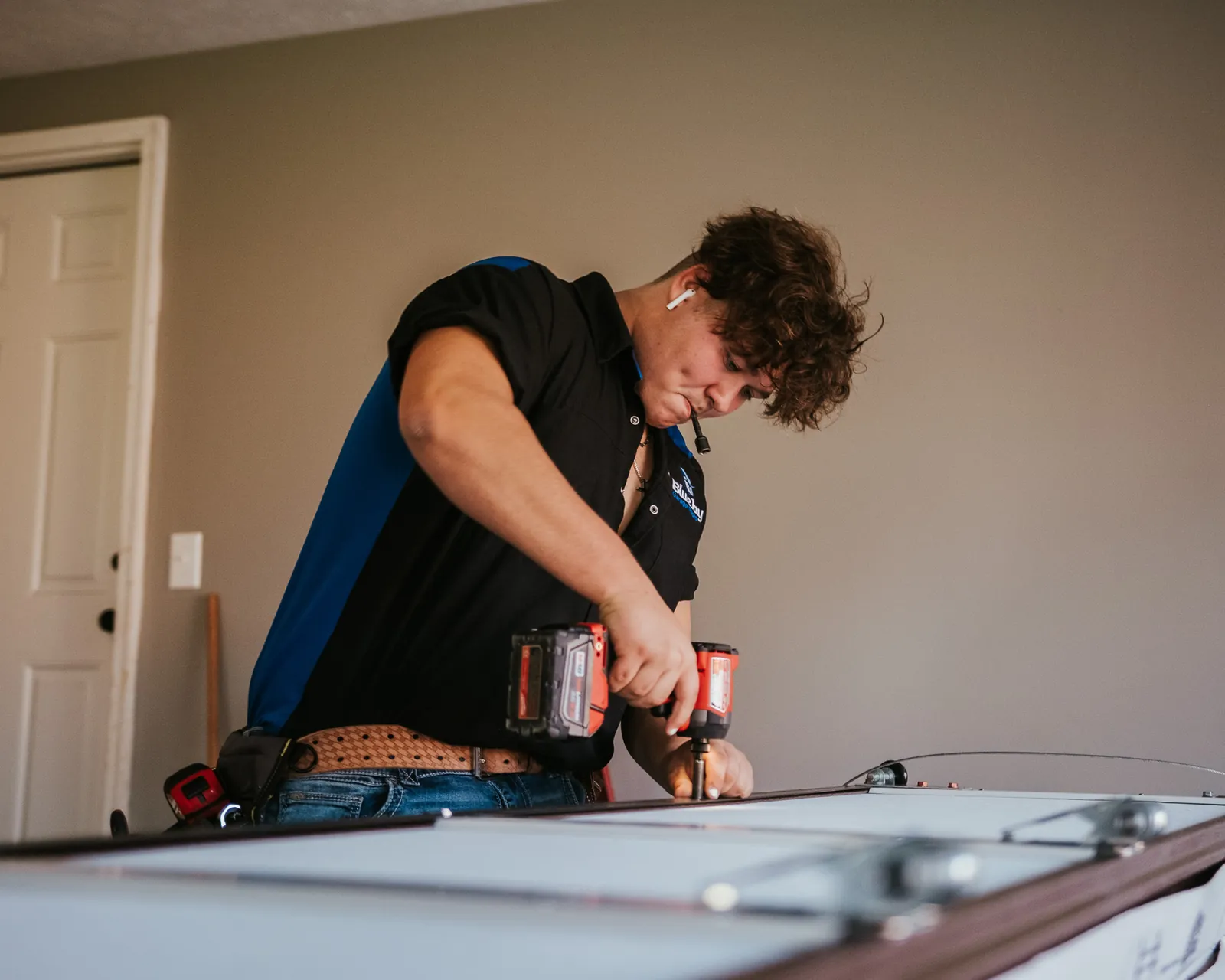
A successful garage door replacement requires more than a standard toolbox. Professionals use specific tools like winding bars for torsion springs and cable pullers, which are not common household items. The installation process demands a high degree of precision. Tracks must be installed perfectly level and parallel, and the door sections must be aligned correctly to prevent binding, jamming, or the door coming off its track. Furthermore, the door must be perfectly balanced with the spring system. An improperly balanced door puts immense strain on the garage door opener, leading to premature failure and costly repairs. These intricate mechanical relationships are why specialized expertise is essential for a safe and functional installation.
Considering Your New Garage Door Options
Before replacement, it's helpful to know the common types of residential garage doors. Your choice will impact your home's curb appeal, maintenance needs, and how you use the space. A professional can help you assess your garage's structure and recommend the best fit.
When choosing a new door, think about factors like material durability, insulation properties, and overall style. While a repair might solve some issues, a full replacement is often a better long-term investment for a door with widespread damage, significant rust, or outdated safety features.
- Sectional Doors: The most popular choice in the U.S., these doors are made of panel sections connected by hinges that roll up and back along a track.
- Roll-Up Doors: Often used in settings where ceiling space is limited, these doors are made of steel slats that coil around a drum above the opening.
- Side-Hinged Doors: These operate like a large pair of entry doors, swinging open from the middle. They offer a traditional, barn-door aesthetic.
- Sliding Doors: An older style that is less common now, these doors slide to one side along a track, requiring a long garage wall to be clear.
Safe Homeowner Maintenance for Your New Door
Once your new door is professionally installed, regular care can keep it running smoothly. There are a few simple maintenance tasks you can perform safely. Monthly, check that the auto-reverse safety sensors are working. Follow the safety-reversal test in your opener's manual, with the test object it specifies, only on a level, undamaged door that moves normally. When you press the button to close the door, it should immediately reverse upon detecting the object. If it doesn't, stop using the door and call a technician.
Visually inspect the door's components—rollers, hinges, cables, and springs—for signs of wear or damage. Look for frayed cables or broken spring coils, but do not touch them. Keep the tracks clear of debris. You can also lubricate moving metal parts like hinges and steel roller stems (do not lubricate nylon rollers) according to your owner's manual to ensure quiet operation.
Replacement Includes Sizing, Removal, and Opener Setup
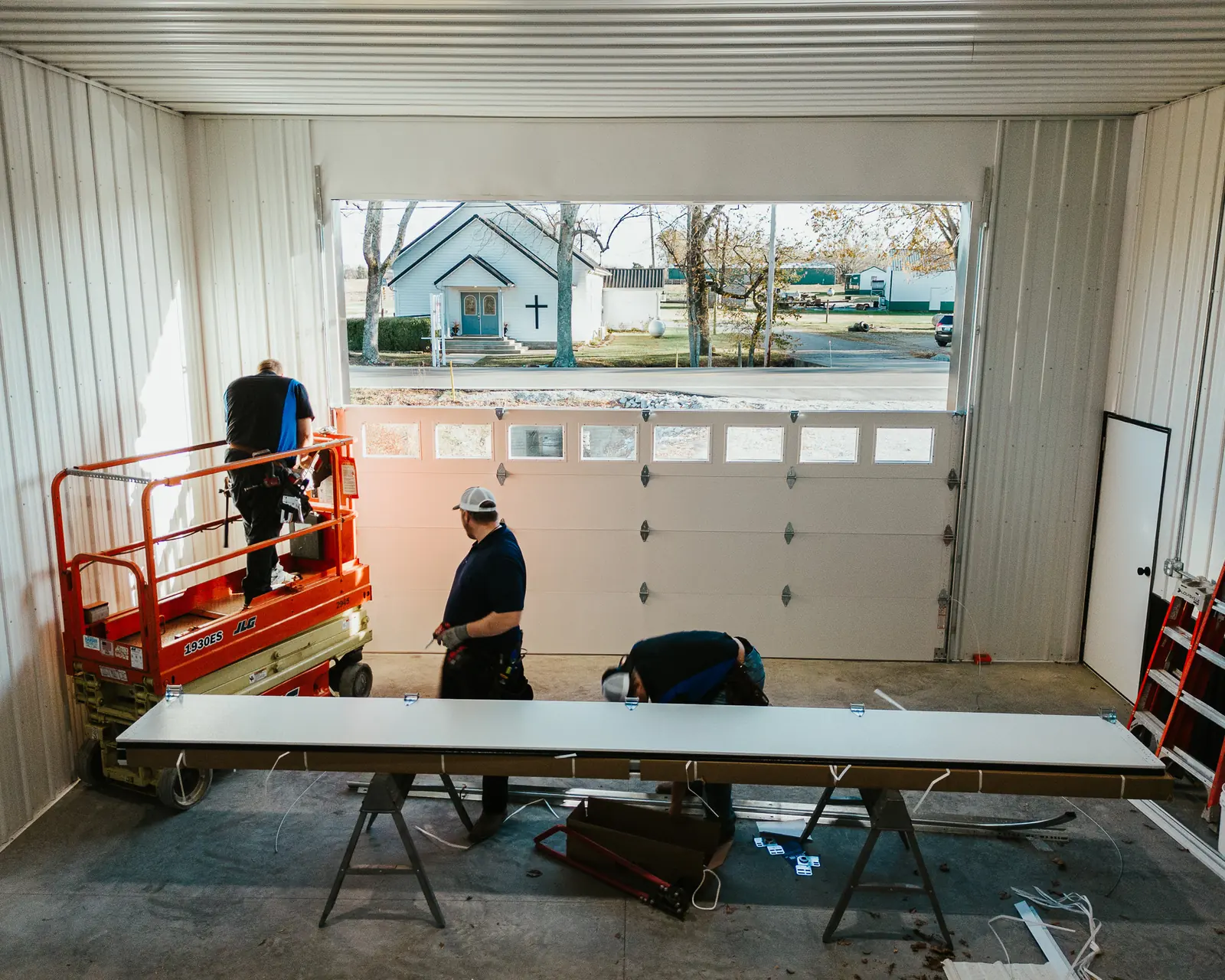
The work begins before the new panels arrive. Blue Jay’s replacement process includes consultation and measurements to help select a door that fits the opening, followed by removal of the old door. Accurate sizing matters alongside the track alignment and spring balance needed for the new system.
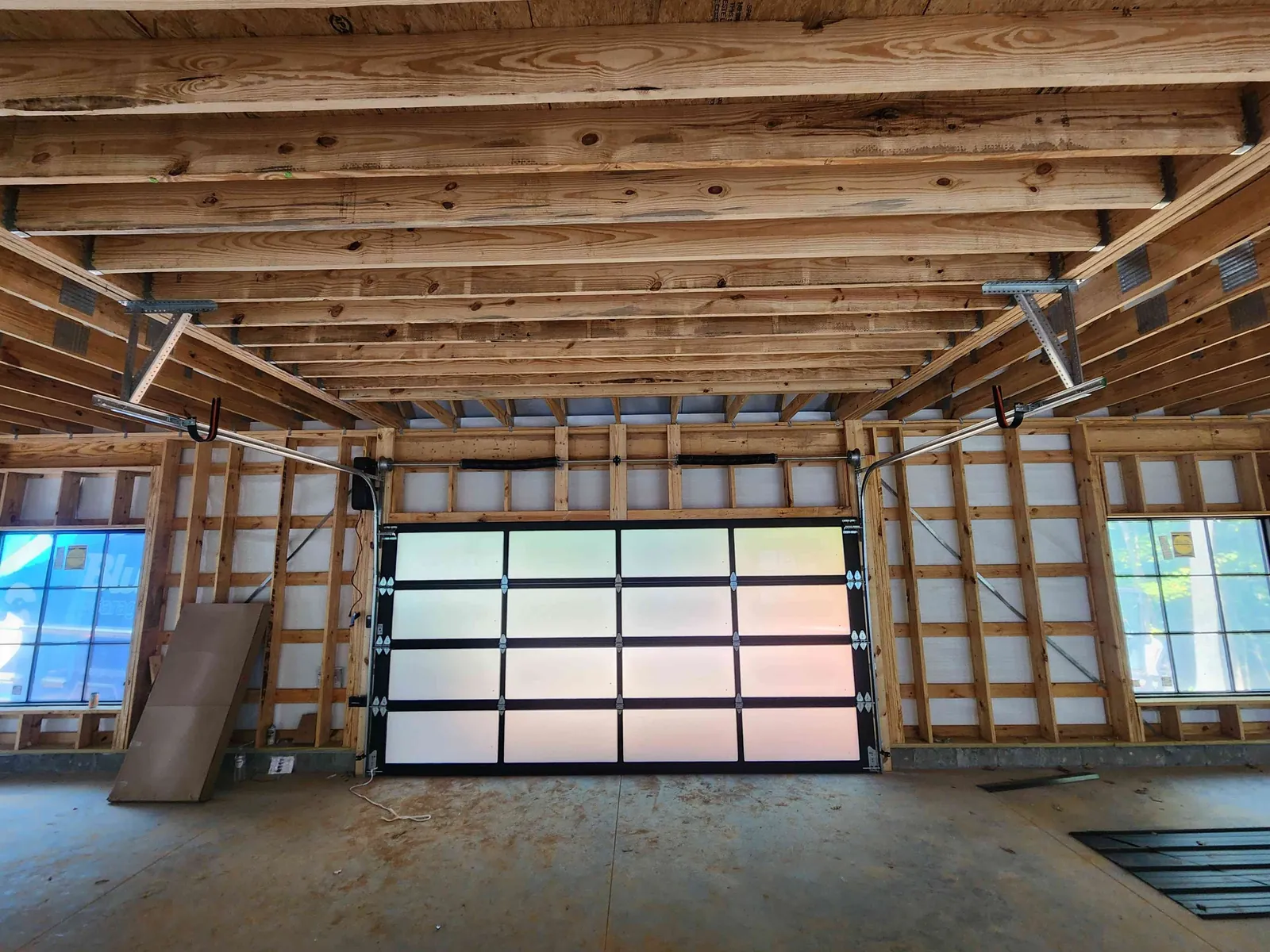
An electric opener adds wiring and programming requirements to the installation. Hanging the door is not the final step: Blue Jay tests safety, balance, and smooth operation before completing the job. These checks help establish that the door and opener work together rather than treating each as a separate piece of equipment.
The Bottom Seal Is Part of a Complete Installation
A replacement door also needs a properly fitted bottom seal. This flexible edge helps limit outside air, pests, and water entering beneath the closed door. A door can move smoothly yet still leave gaps at the floor, so seal fit deserves attention as part of the installation.
After installation, visually check the seal for cracks, wear, or visible gaps while the door is closed. Ask a technician to assess a poor fit rather than adjusting the door’s hardware yourself. The seal helps protect the opening, but it is not a substitute for correcting alignment problems.