
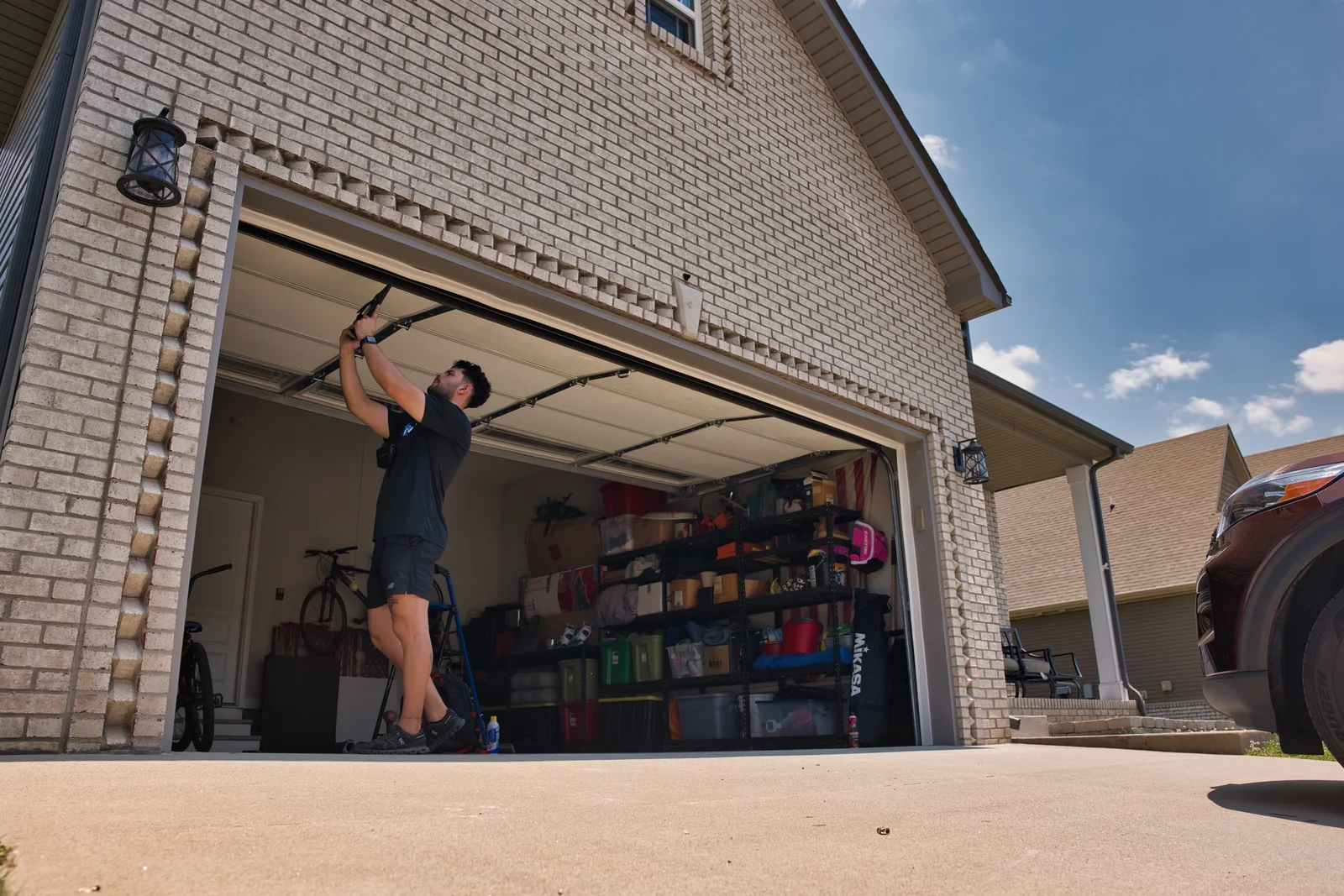
Before You Start: The Stop Check
Stop first: if the door is crooked, off its tracks, stuck partly open, jerking, visibly damaged, much heavier than usual, or you heard a loud bang or see a gap in a spring or a loose or frayed cable, do not operate it, do not pull the emergency release and do not try to lift it. Keep people, pets and vehicles clear and call a technician.
Use the owner checks below only when the door is level, stable and has been moving normally. Leave tightening hardware, testing door balance and working on parts under spring tension to a technician.
1. Look and Listen
If the door passed the stop check, watch it through one normal cycle from a safe distance. Note jerking, hesitation, scraping, grinding or popping. If you see or hear any of these, stop using the door and book a visit rather than running it again to investigate.
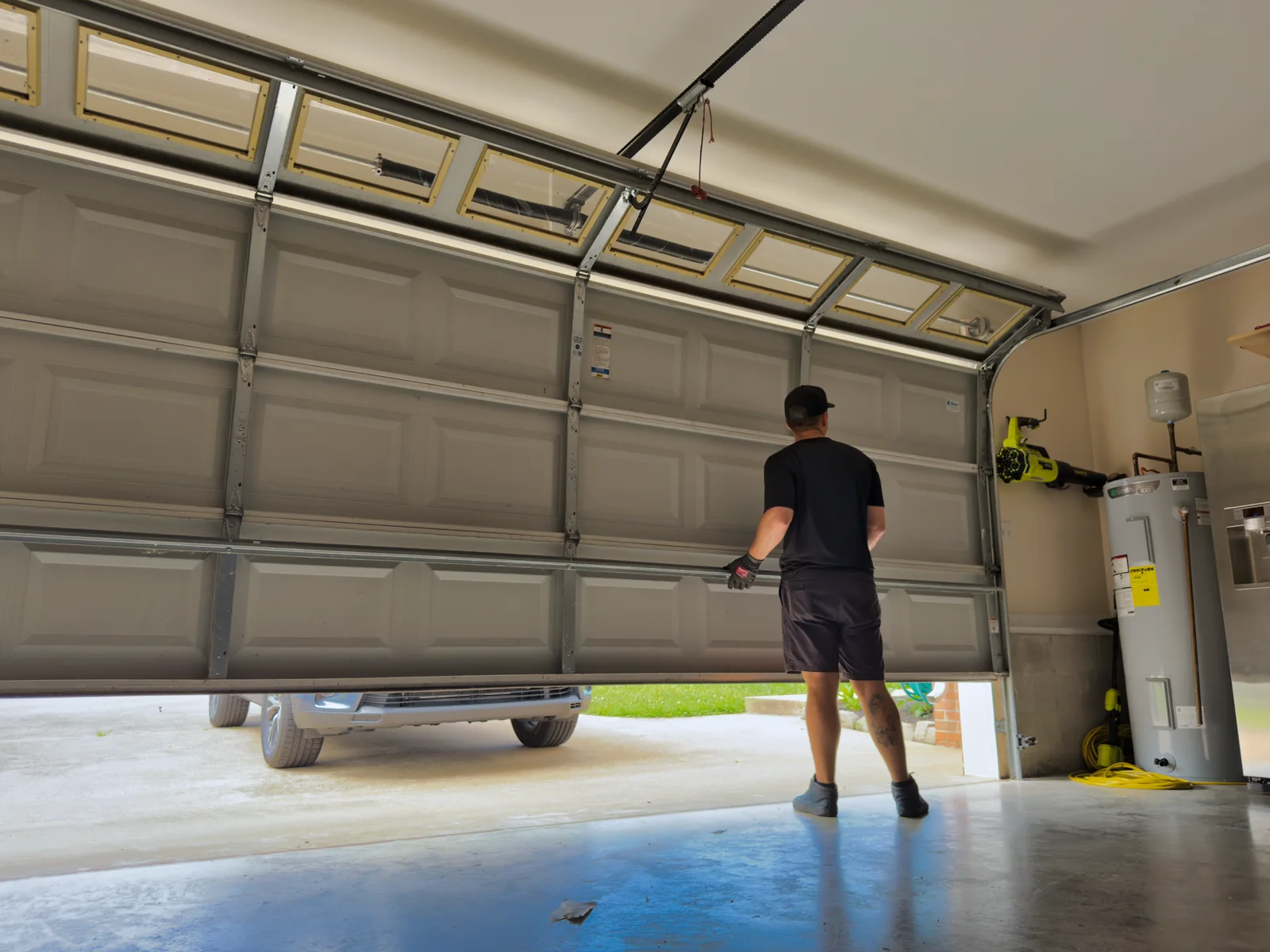
2. Notice Loose Hardware (Leave Tightening to a Pro)
Daily movement can loosen hardware over time. Look for brackets, hinges or fasteners that seem loose or out of place, but do not tighten or loosen them yourself; some are attached to parts under spring tension, such as the bottom brackets. Point them out to a technician.
3. Watch for Balance Warning Signs
A door that drifts, drops quickly, struggles to open or looks uneven may be out of balance. Testing balance involves disconnecting the opener and handling the door, so leave it to a technician; balance and spring adjustment are part of a professional service visit.
4. Inspect the Rollers by Eye
With the door closed and still, look at the rollers for chips, cracks or wobble. Worn rollers are replaced by a technician because the job involves parts connected to the door's cables and bottom brackets.
5. Check the Weatherstripping
Look along the bottom seal and the side and top weatherstripping for cracks, gaps or brittle sections where light, water or debris gets in. A worn seal is worth noting for repair or replacement.
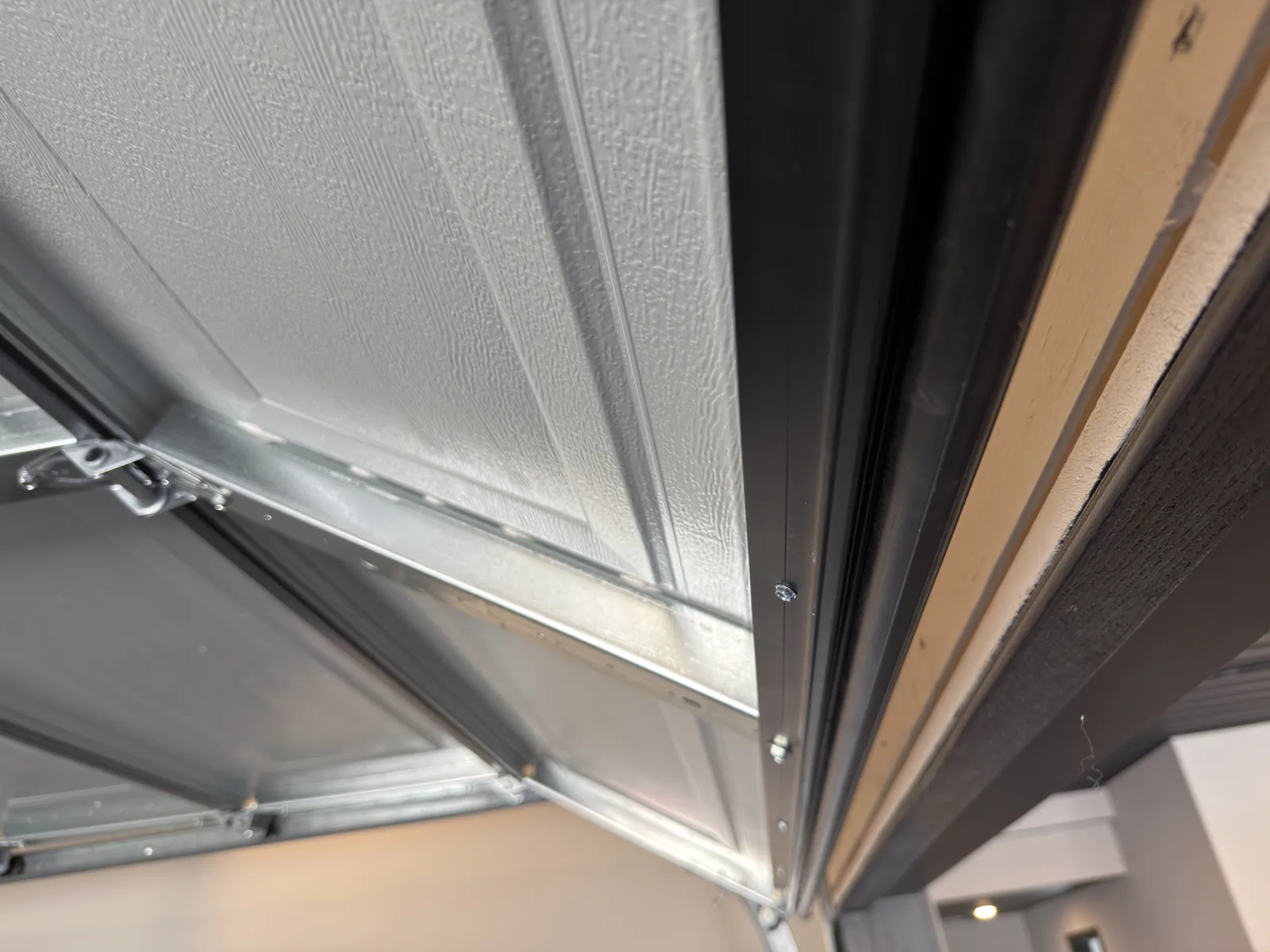
6. Lubricate Only as the Manufacturer Directs
On a door that moves smoothly and passed the stop check, follow your door or opener manual for which parts to lubricate and with what. Do not lubricate a door that is jerking or struggling, do not grease the tracks, and do not lubricate springs or cables unless the manufacturer's instructions say to.
7. Check the Cables From a Distance
Look at the lift cables near the bottom corners of the door without touching them. Fraying, rust, kinks or slack are warning signs. Cables are under high tension, so if anything looks wrong, stop using the door and call for repair.
8. Test Auto-Reverse Using Your Opener's Instructions
Skip this test if the door is damaged, uneven, off track, partly stuck or a spring or cable may be broken. Otherwise, follow the safety-reversal and sensor test in your opener's manual, including the test object and placement that manufacturer specifies. Keep people and pets out of the opening. If the door does not reverse as the manual describes, stop using the opener and schedule service.
9. Keep the Tracks Clear
With the door closed and the opener unplugged, look along both tracks for leaves, stones or other loose items and remove them only if you can do so without touching the door's hardware. Do not bend, adjust or loosen the tracks; a bent or misaligned track needs a technician.
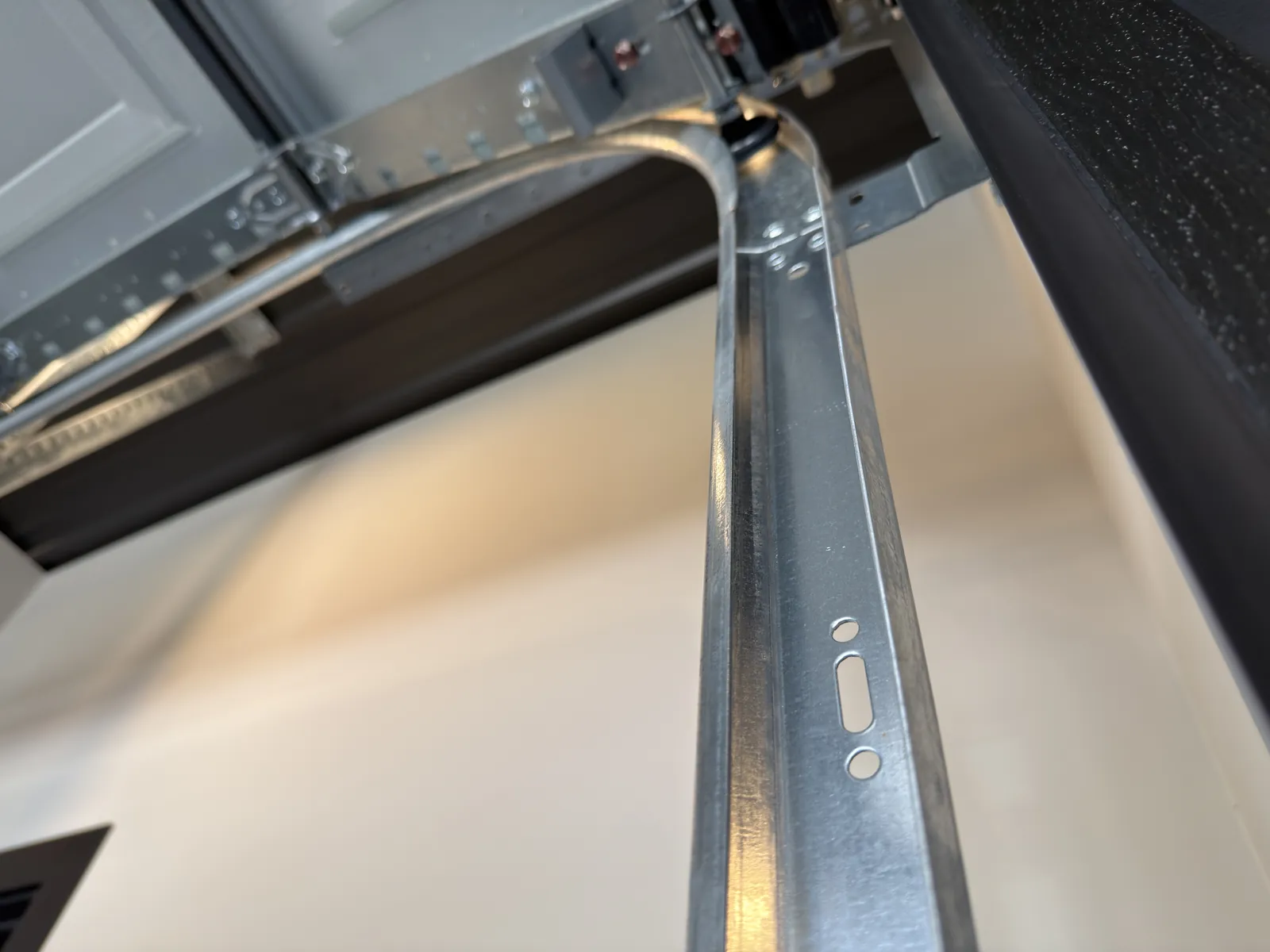
10. Groom the Door's Surface
Wash the outside of the door with a mild cleaner and soft cloth or brush, following any care guidance for your door's material. Note peeling, rust spots or panel damage so they can be looked at before they spread.